// AI RESUME BUILDER • IMPORT · TAILOR · COVER LETTER
Build a resume ready to send.
Import your CV, tailor it to a job with AI, add a cover letter. You approve every change.


Built for careful job applications
Identify where you collected specimens, how many patients or donors you served and which quality measure you tracked. Hospital rounds, mobile visits and donor drives use different units of work.

Give the collection setting so the reader can interpret the workload.
Inpatient rounds across three medical-surgical units.
Keep daily visits, patients and collections in their original units.
Twelve to 15 scheduled mobile visits a day.
Use a recorded rate for the patients or donors you actually served.
96% first-attempt success at a fixed donor center.
Name the systems in which you entered orders or recorded specimens.
The EMR and the laboratory information system.
Separate your courier handoff from the lab’s delivery window.
99% delivered within the lab’s transport window.
Use the credential name, issuing body and current status from your own record.
California Certified Phlebotomy Technician I.
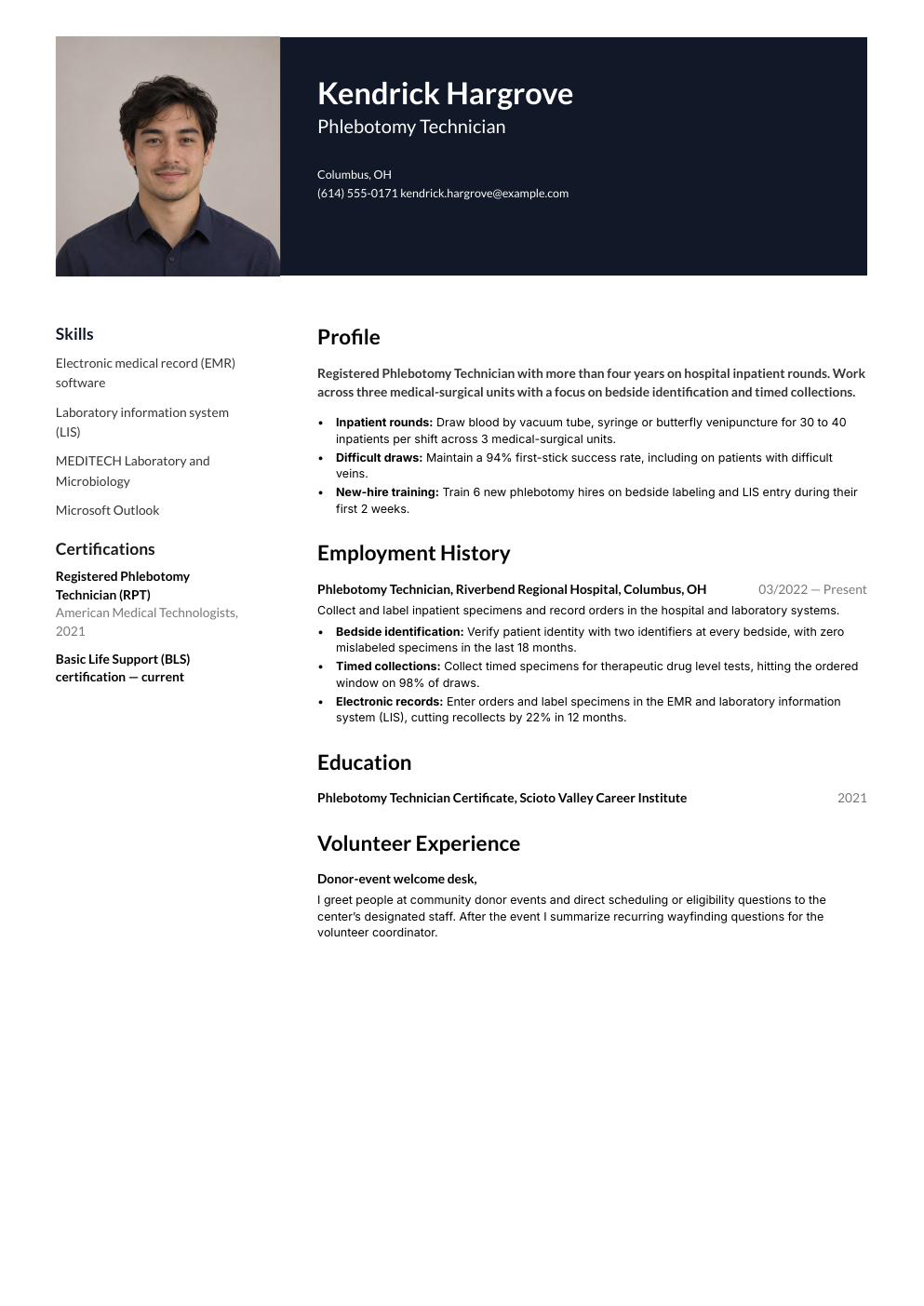
Use patients per hospital shift, home visits per day or donor collections at a fixed center. A switch of units can change the claim.
A first-attempt rate, rejection rate and labeling record answer different questions. Select the one tied to your assignment.
Identify the rounds, route or center and the period covered. This makes a percentage interpretable without sharing patient details.
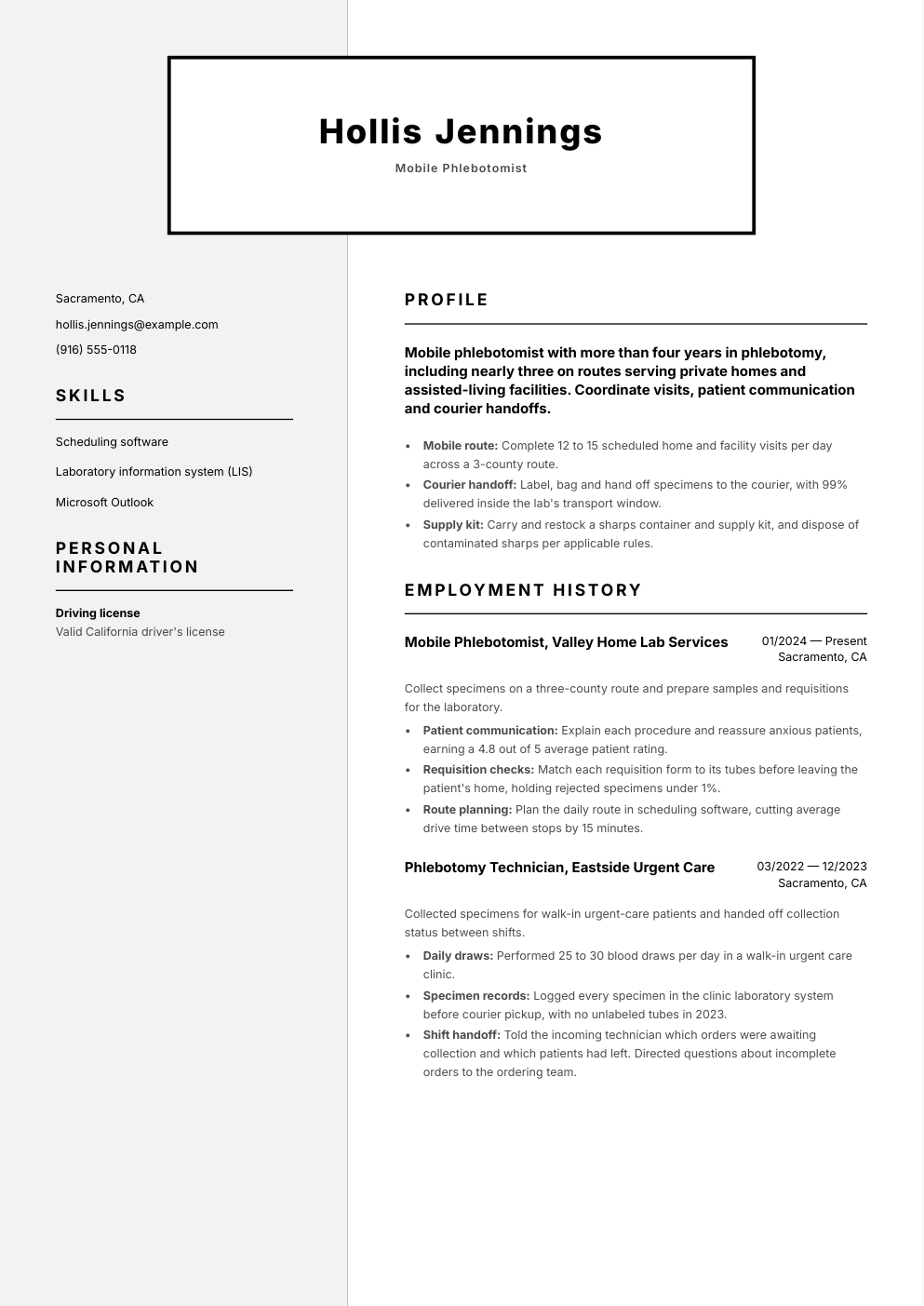
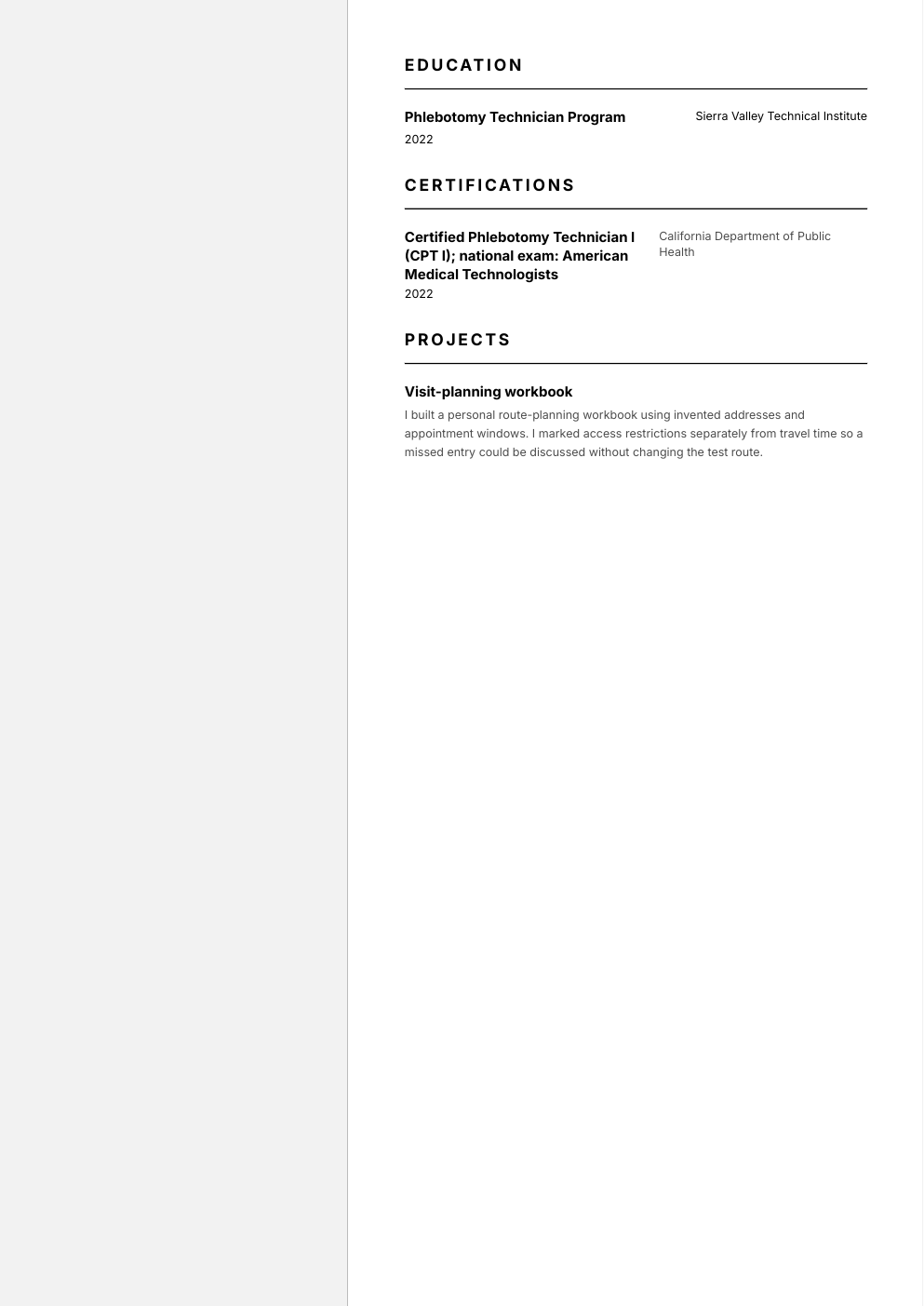
Name the service area in broad terms and a normal visit count. Leave home addresses and patient identities out.
Describe the label, requisition or tracking record you were responsible for under the service’s procedures.
Say when the courier took possession. Attribute later delivery performance to the recorded transport process.
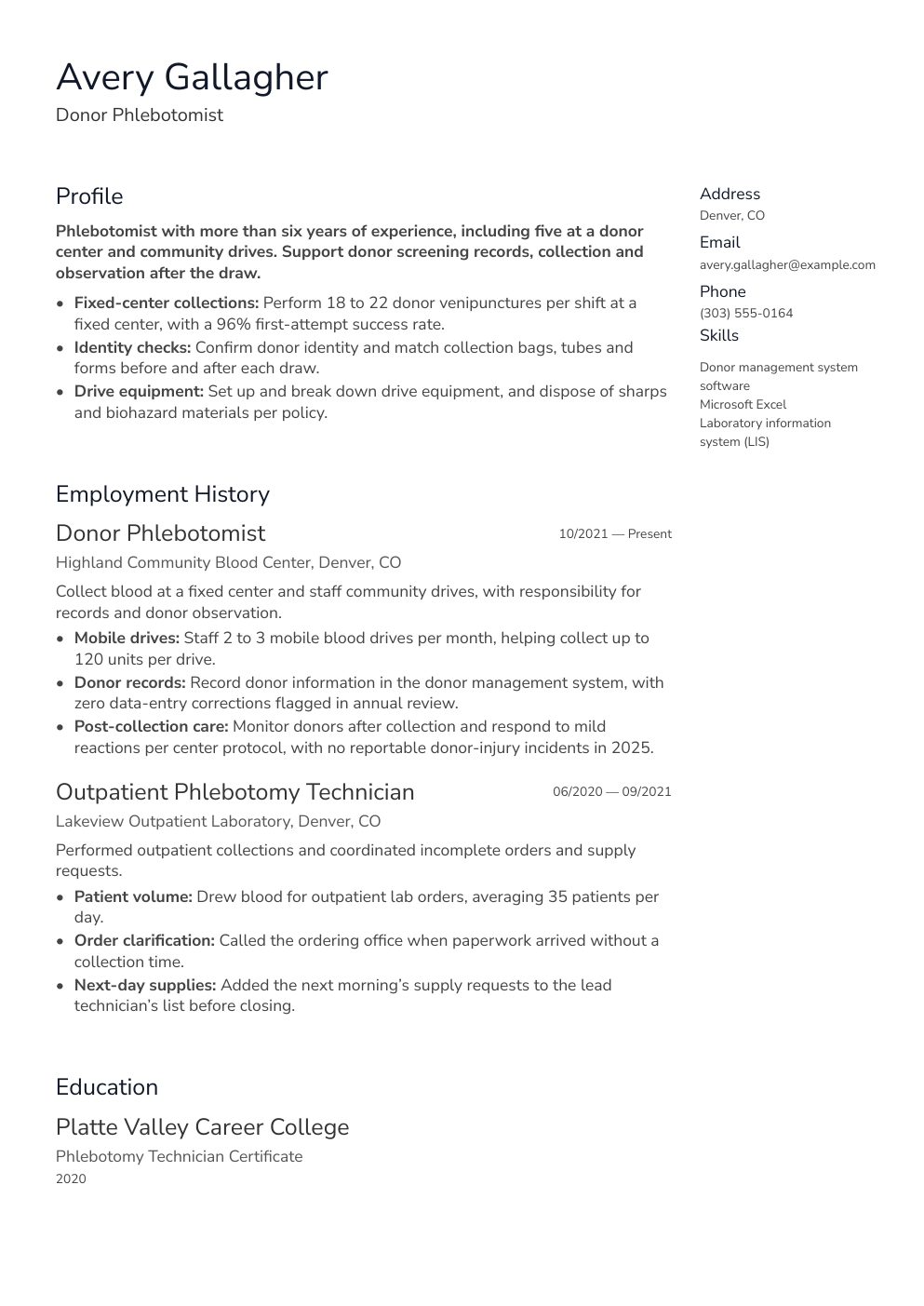
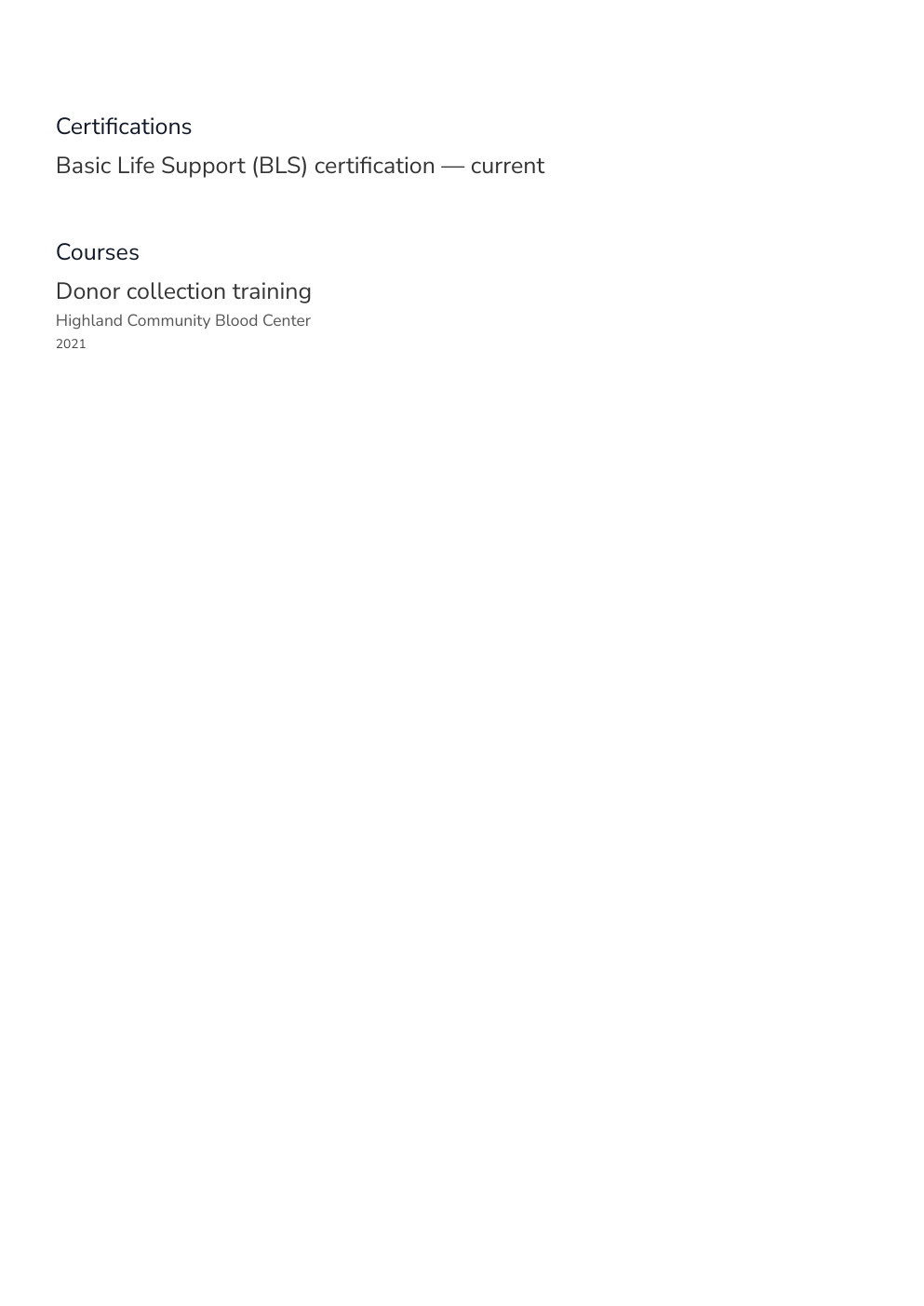
Show your current certification and the settings where you draw blood. Include a typical draw volume if you tracked it.
List the site type, supervised hours and completed draws. Separate venipuncture from capillary collections if your log tracks both.
Name the equipment you have used, such as evacuated tube systems, butterfly sets or lancets, when it matches the posting.
Describe the steps you handled, such as verifying identifiers, labeling at collection and delivering samples by the cutoff.
Use a redraw rate only if you had access to the count and denominator. State the period measured and whether it was your rate or the team’s.
Describe the patient population and technique within your scope. Leave out any story that could identify a patient.
List the sites or route you covered, how you kept supplies ready and how you handled transport or handoff.
Use a dedicated section near the top. Give the exact credential name, issuer and active status.
Name practices you followed, such as identity checks, infection control and sharps disposal. A specific routine is easier to assess than a broad claim.
Say so. A verified tally of supervised collections and a description of your labeling and handoff work demonstrate readiness.
Import your CV, tailor it to a job with AI, add a cover letter. You approve every change.
Built for careful job applications
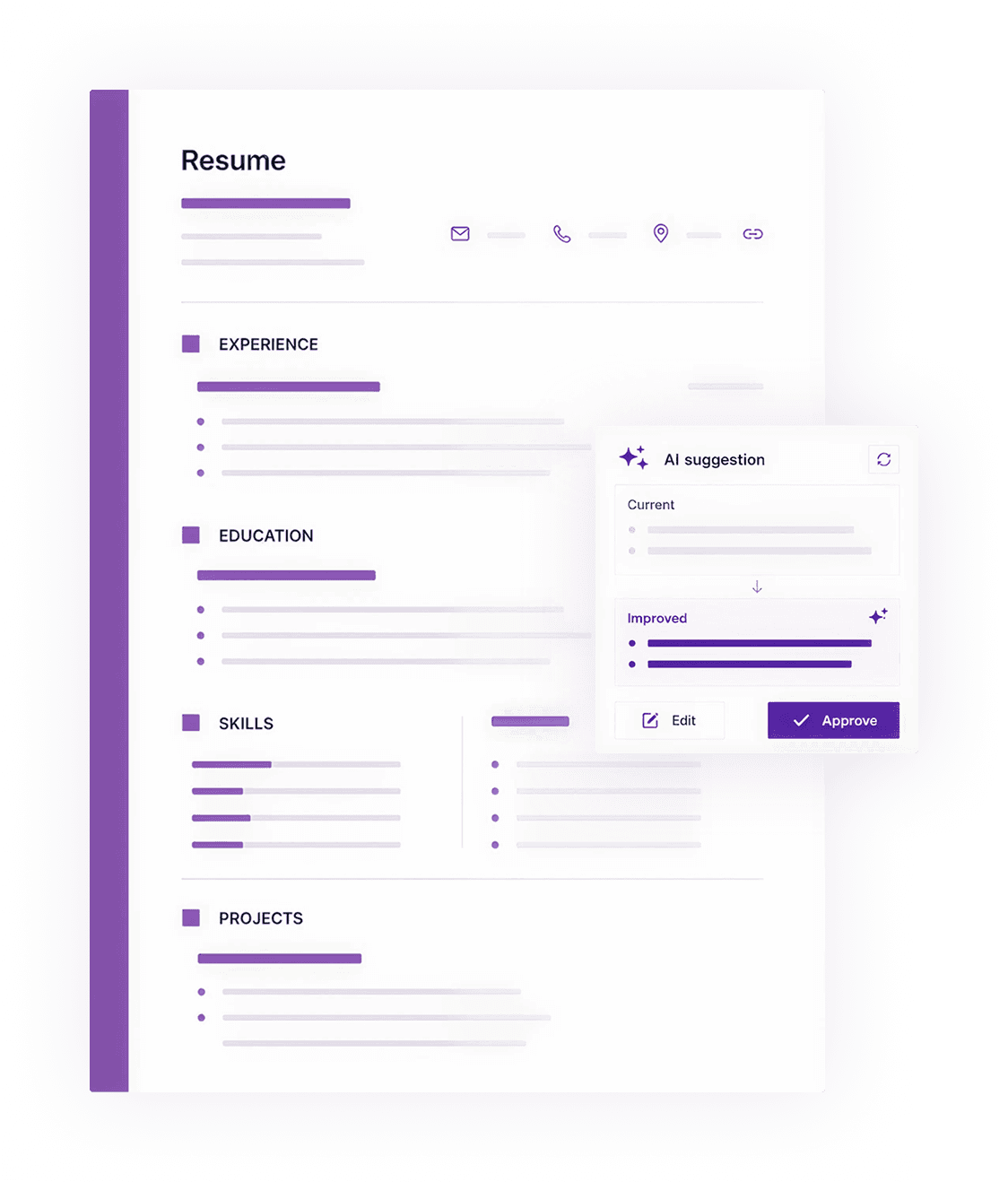
30 resume templates
Choose from professional layouts with real A4 previews.
ATS-friendly templates
Clean headings and text-based structure help hiring systems read the resume correctly.
AI suggestions you control
Rewrite summaries, bullets, and education text, then approve or edit before anything changes.
Job-description suggestions
Paste a role description and review suggestions before applying them.
Export-ready files
Download PDF, DOCX, or TXT when your resume and cover letter are ready.
Start from the CV you already have. Point it at a job description and export a resume and cover letter written for that role.
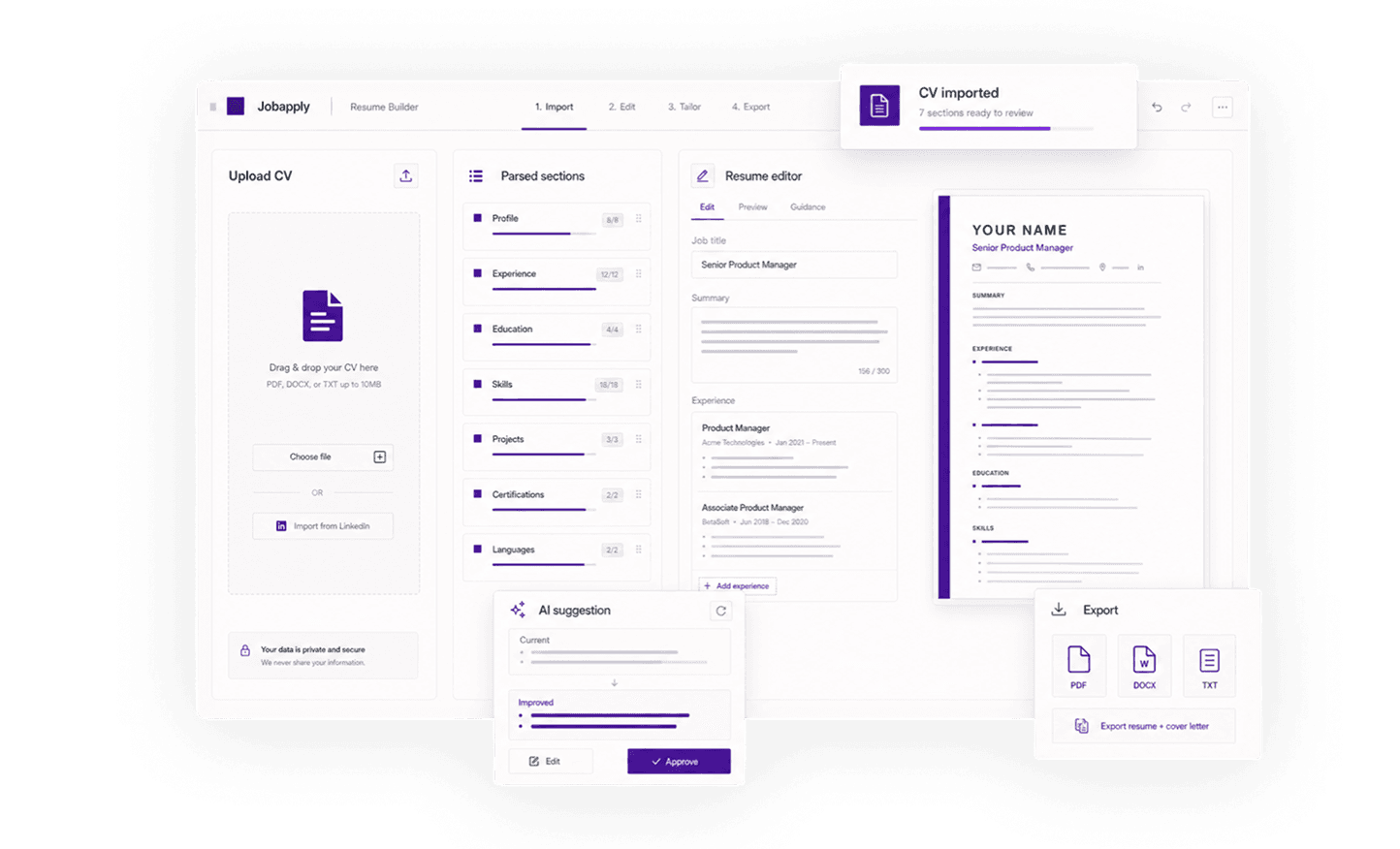
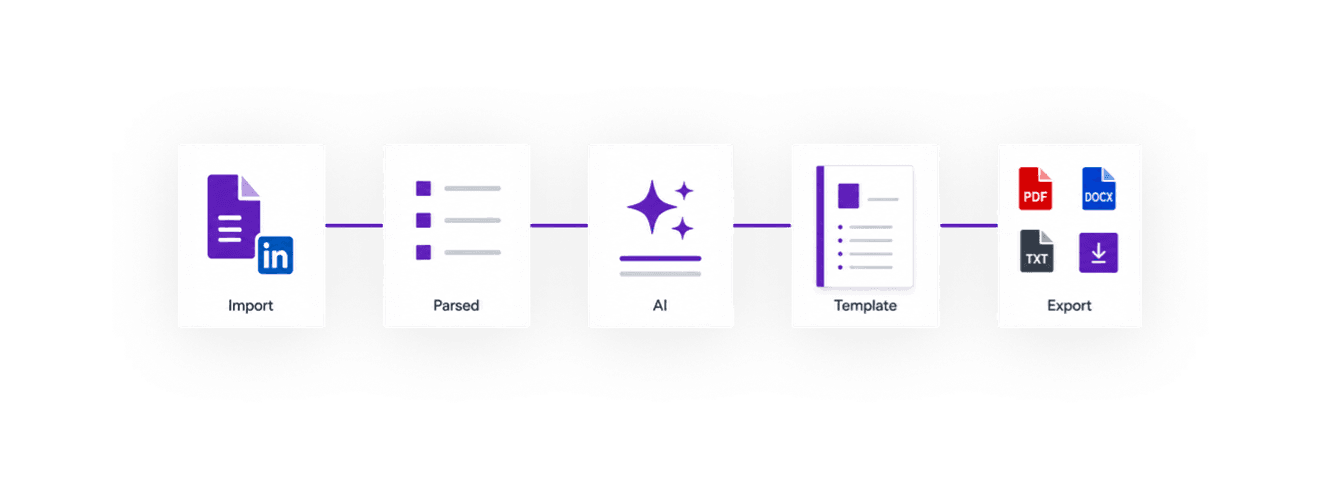
Every AI change appears beside your current text. Accept it, edit it, or skip it.
Start with a file or pasted text, then review the imported sections.
Fill in personal details, experience, education, skills, and optional sections.
Review job-description suggestions before applying them to your resume.


Download resume and cover letter files as PDF, DOCX, or TXT.




Start editing right away
Choose a template, import or add details, and keep editing without an activation gate.
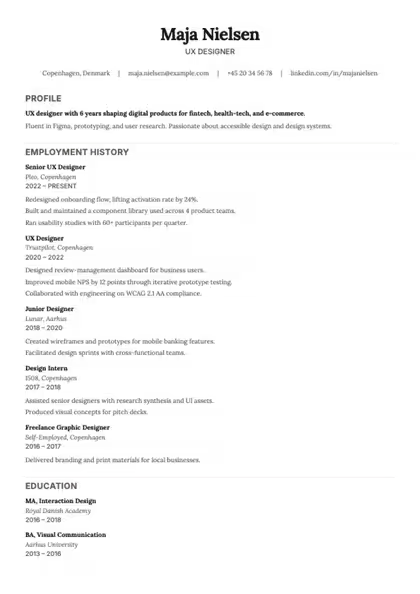
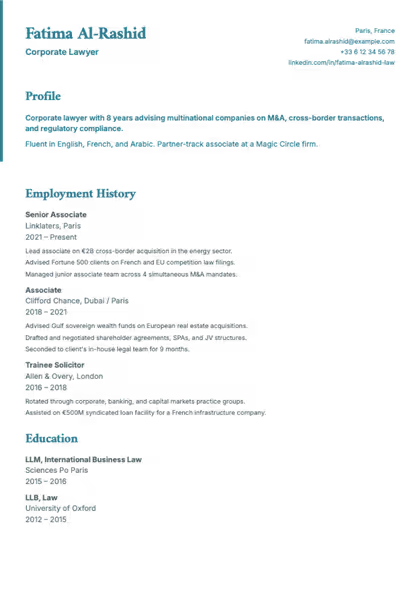
Built for academic CVs — calm serif titles and room for long publication lists.
Use this template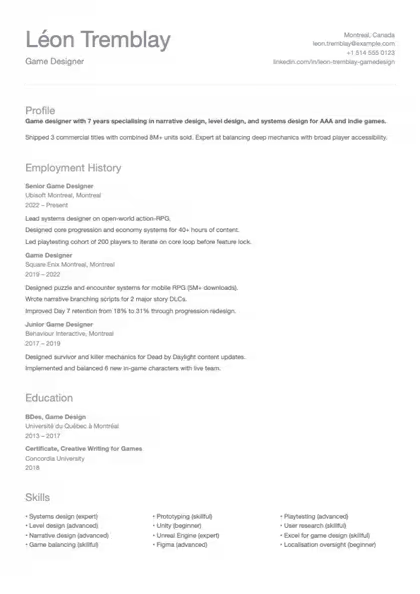
Swiss-minimal and strictly grayscale, for when restraint is the statement.
Use this template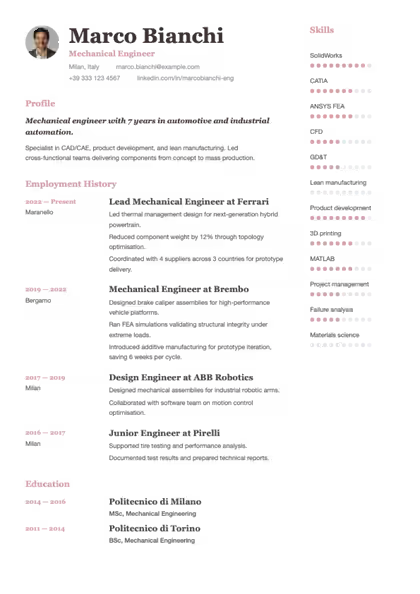
Editorial serifs with a dusty-rose touch — polished without trying too hard.
Use this template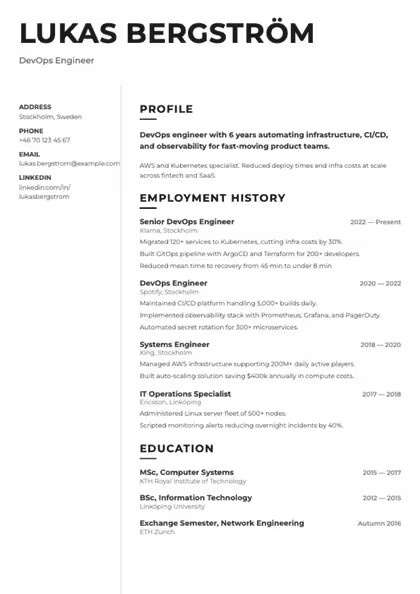
Warm and structured, with an orange accent that keeps formal from feeling stiff.
Use this template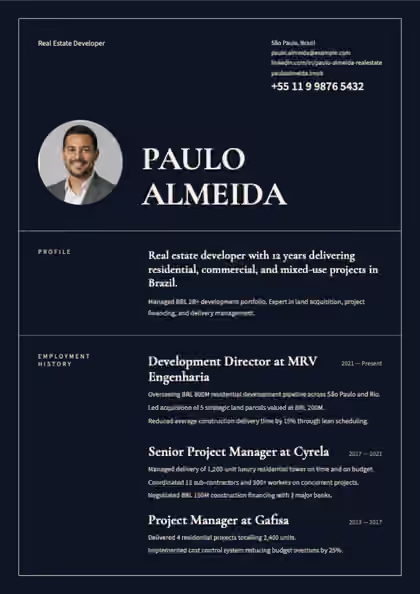
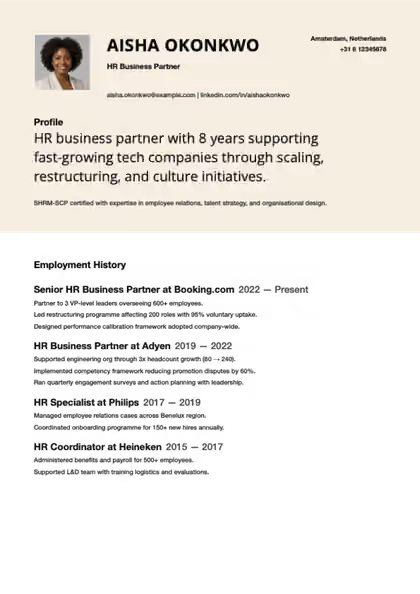
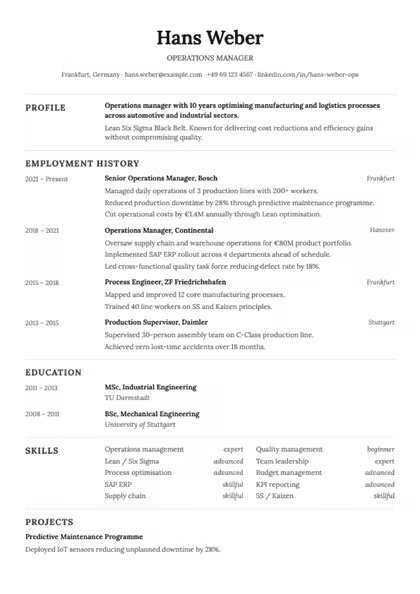
The classic European CV with a date-column timeline recruiters already know how to read.
Use this template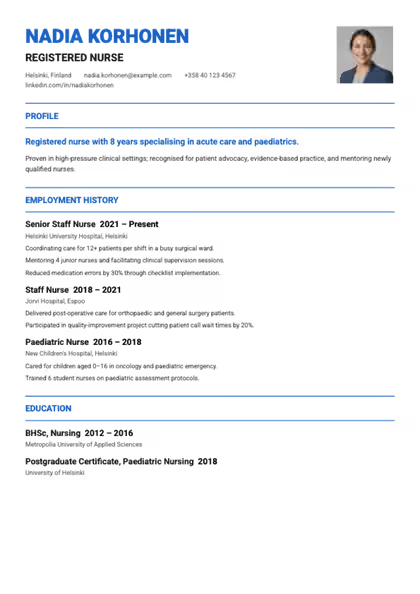
A clean single column with photo — the safe pick that still looks sharp.
Use this template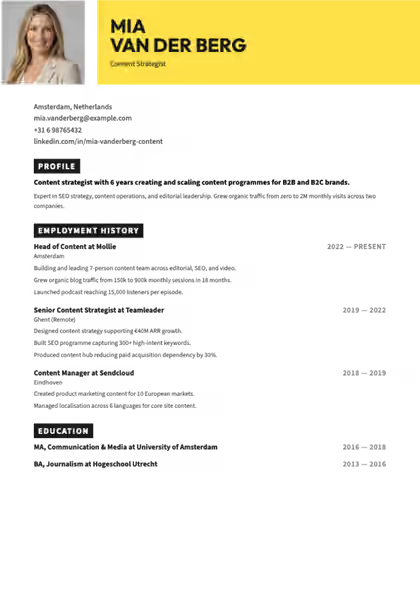
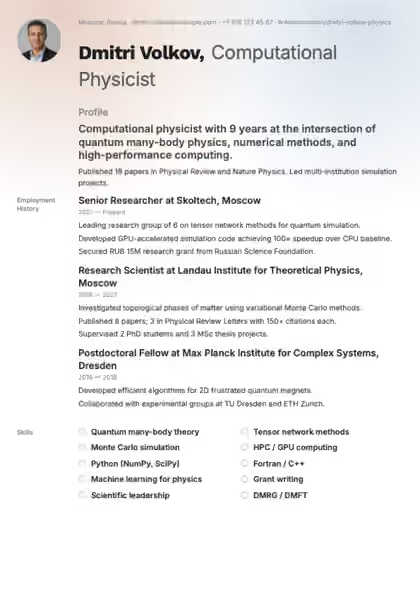
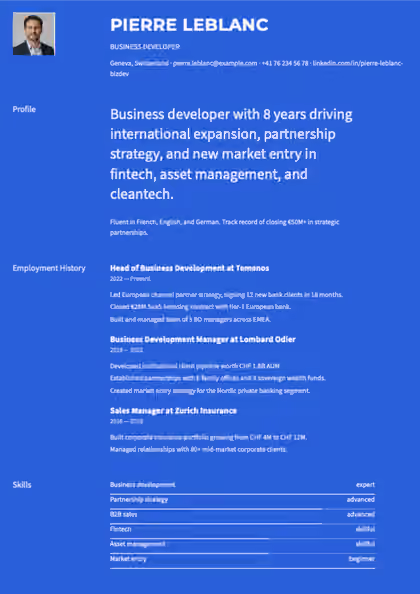
A warm gradient up top, strict left-label structure below — personality and precision.
Use this template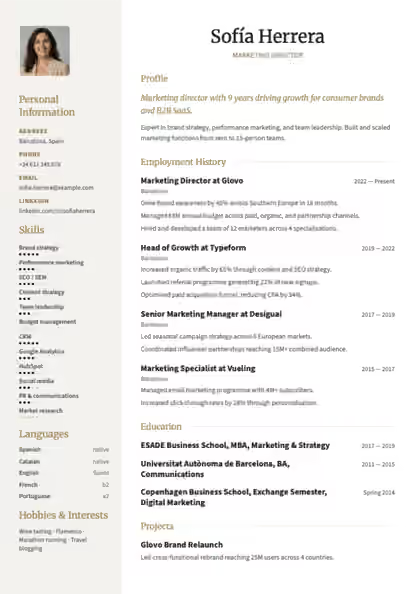
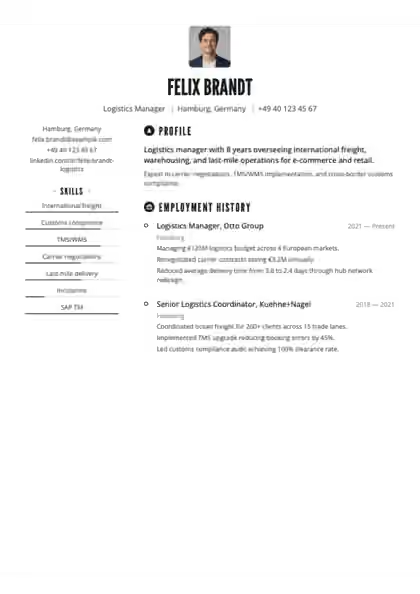
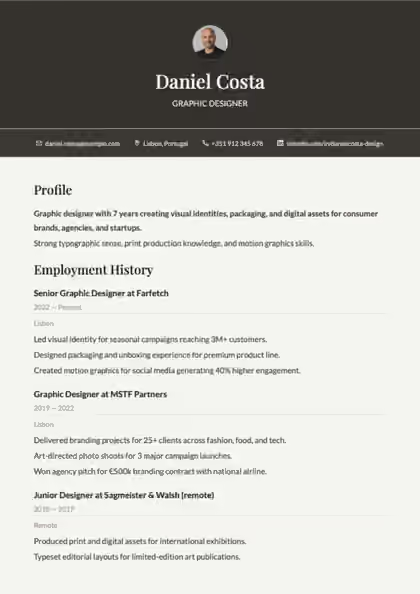
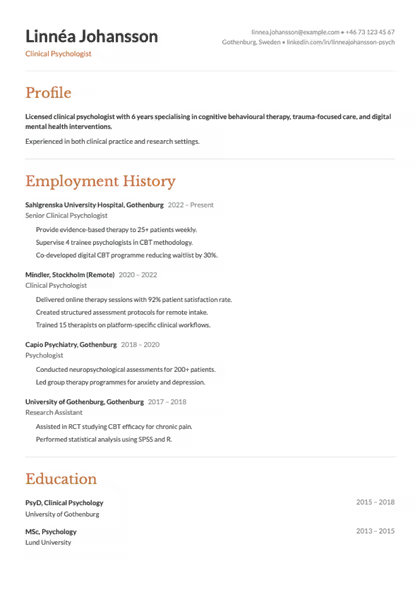
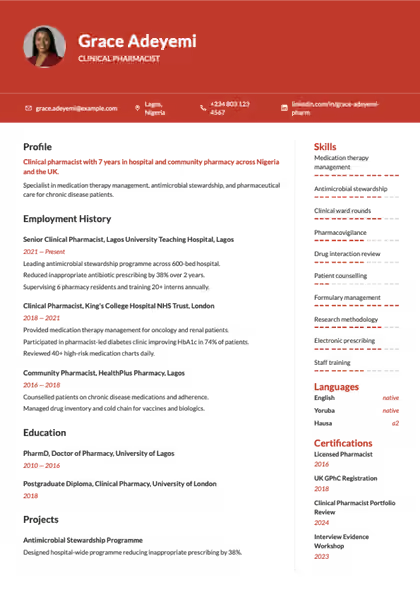
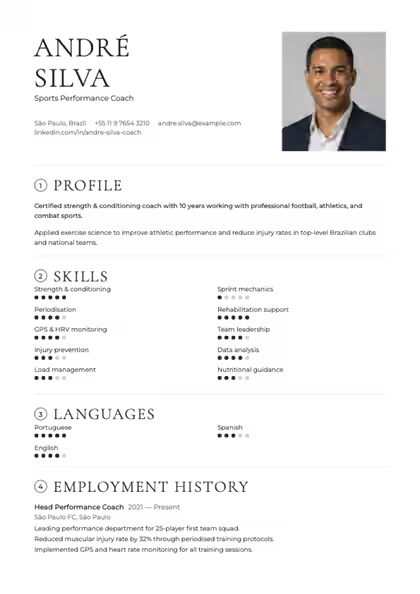
An editorial single column with circled section numbers — crafted, not decorated.
Use this template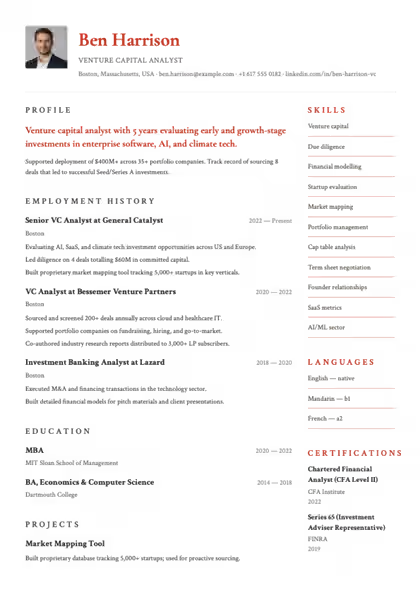
Classic serif two-column with a crimson accent, made for high-stakes applications.
Use this template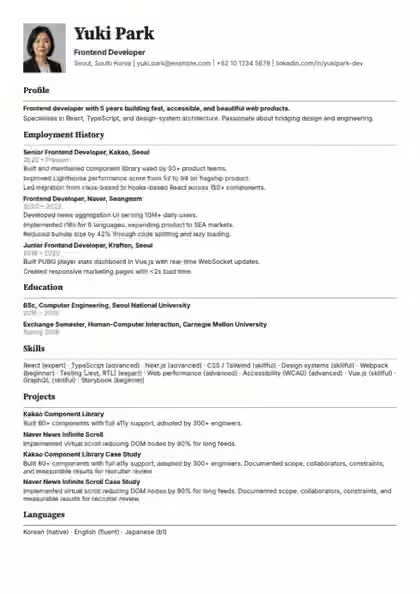
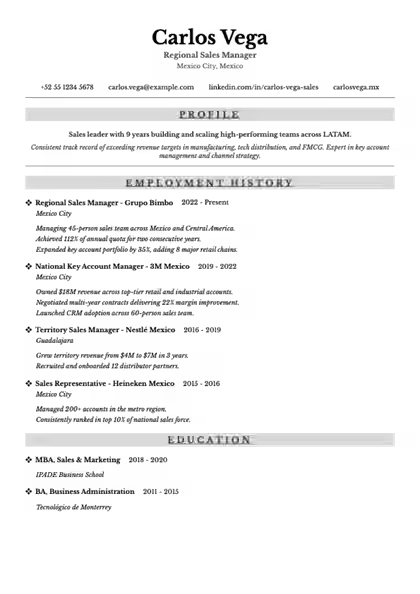
Classical detailing, diamond ornaments, dotted leader lines — fine print done right.
Use this template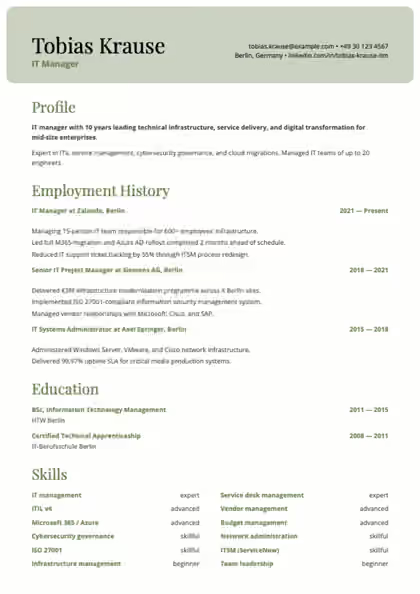
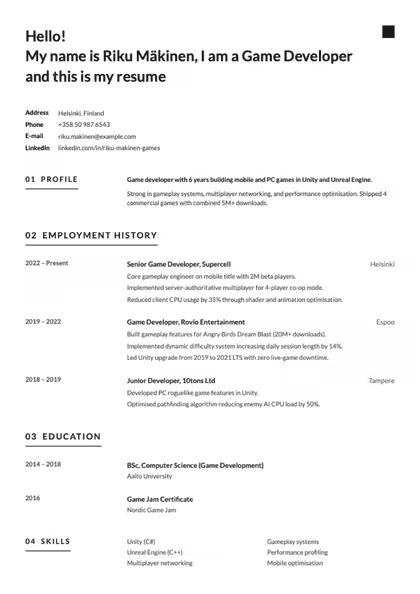
Opens with a greeting, breathes with numbered sections — personal and organized.
Use this template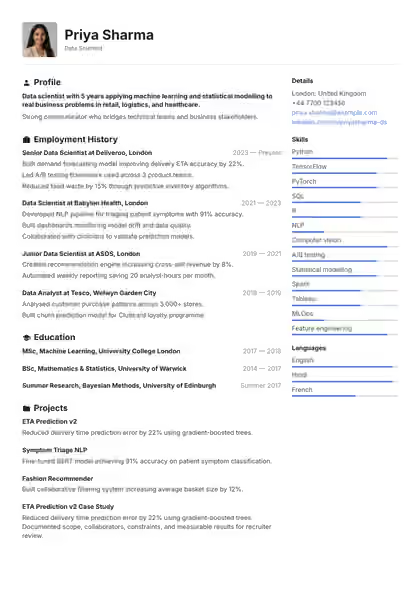
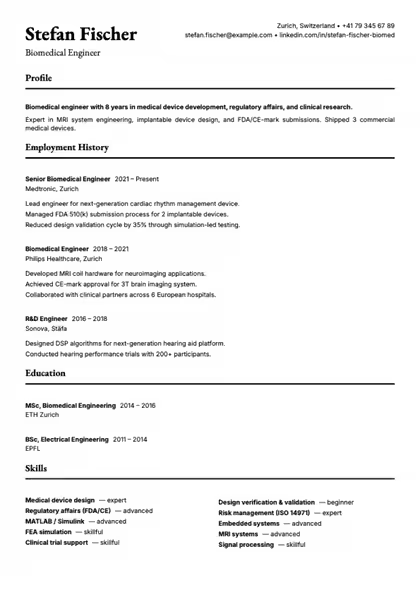
Traditional serifs and bold underline separators, made for deep expertise.
Use this template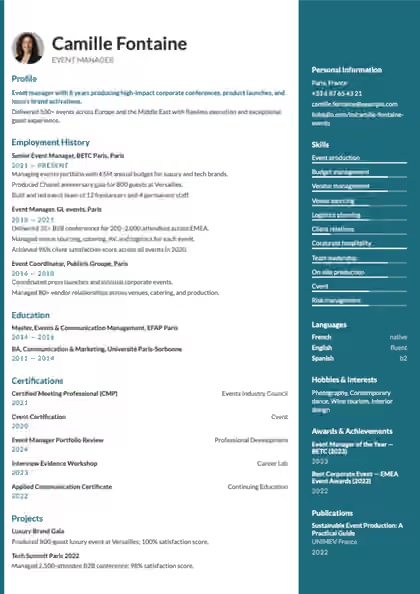
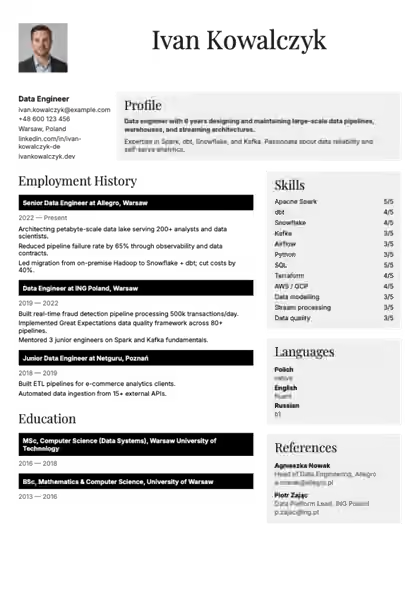
Bureau of Labor Statistics, Phlebotomists · California Department of Public Health, Certified Phlebotomy Technician I · American Medical Technologists, Phlebotomy Technician Certification.