// AI RESUME BUILDER • IMPORT · TAILOR · COVER LETTER
Build a resume ready to send.
Import your CV, tailor it to a job with AI, add a cover letter. You approve every change.


Built for careful job applications
A data analyst resume should show what you can do with data. Name the question you answered, the tool you used and what the business did with your findings.

Say what the team needed to find out before describing the query you wrote.
Which stores had unusually high produce spoilage?
Connect the tool to an actual query, comparison or reporting task you completed.
Matched first orders to ad spend in BigQuery.
Describe the error you tested for and where you caught it in the reporting process.
Checked incoming loads for missing store IDs.
Name the person or team who used the output and say how often they needed it.
Weekly Power BI dashboard for nine category managers.
Say who acted on your analysis and what they changed after reviewing the results.
The team shifted $90,000 of the next quarter’s budget.
Give personal work its own heading and identify the dataset so readers can distinguish it from paid work.
Personal project using about 2.1 million public bike-share trips.
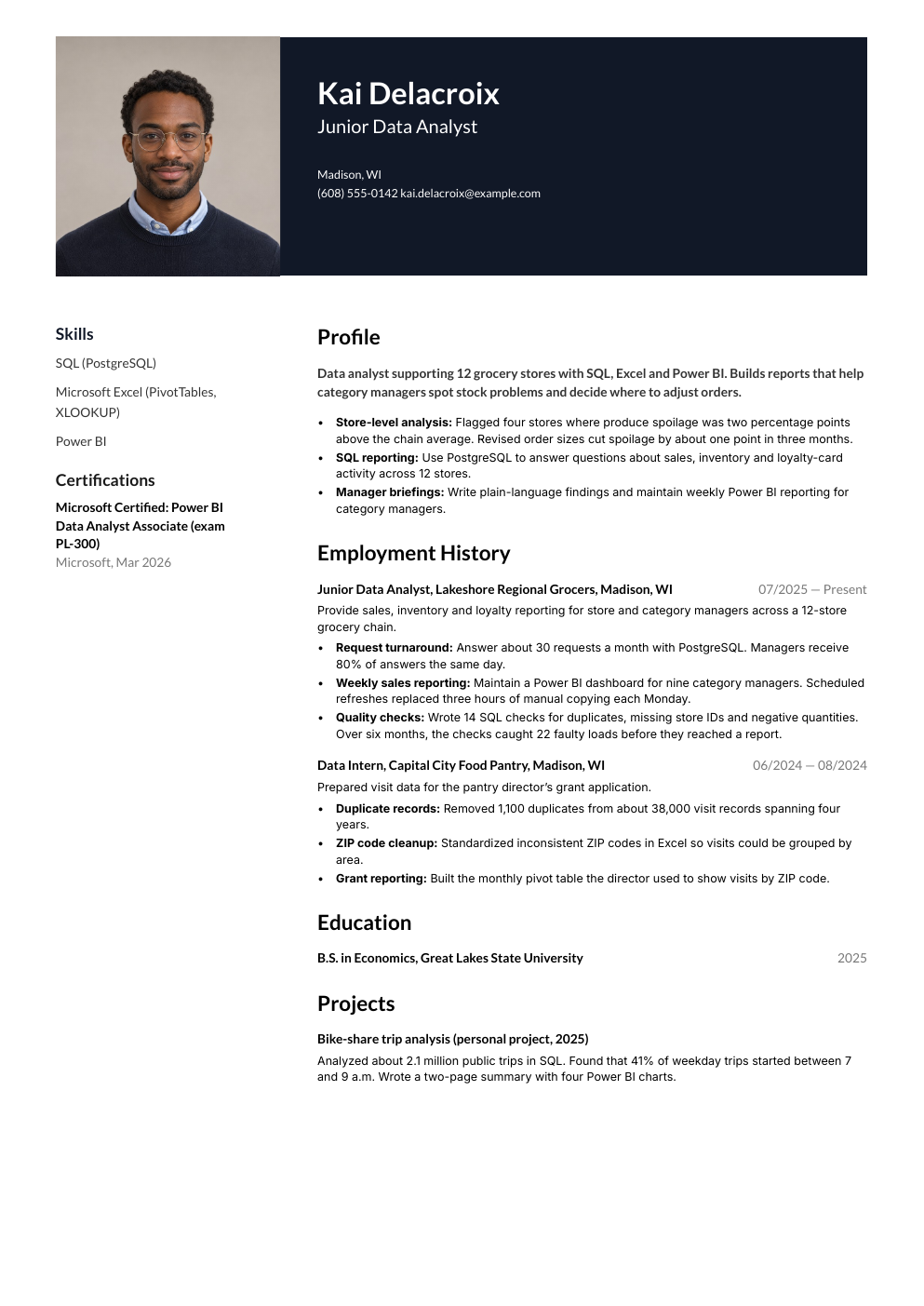
Replace “worked with a large dataset” with the actual size. The pantry file contained about 38,000 visit records across four years.
Replace “cleaned the data” with “removed 1,100 duplicate records.” Grouping visits by area also required consistent ZIP codes.
Explain who needed the cleaned file. The director used a monthly pivot table of visits by ZIP code in a grant application.
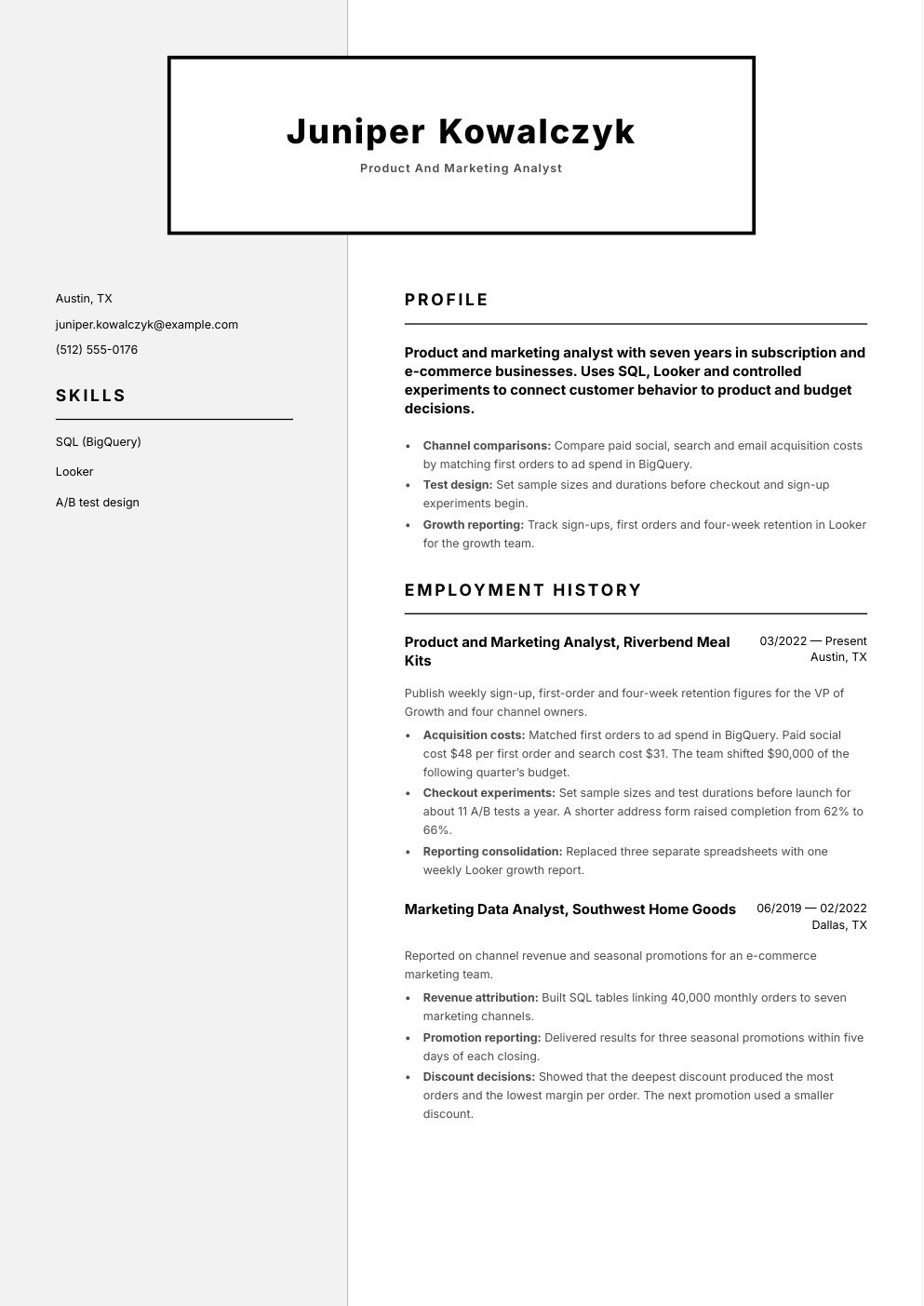
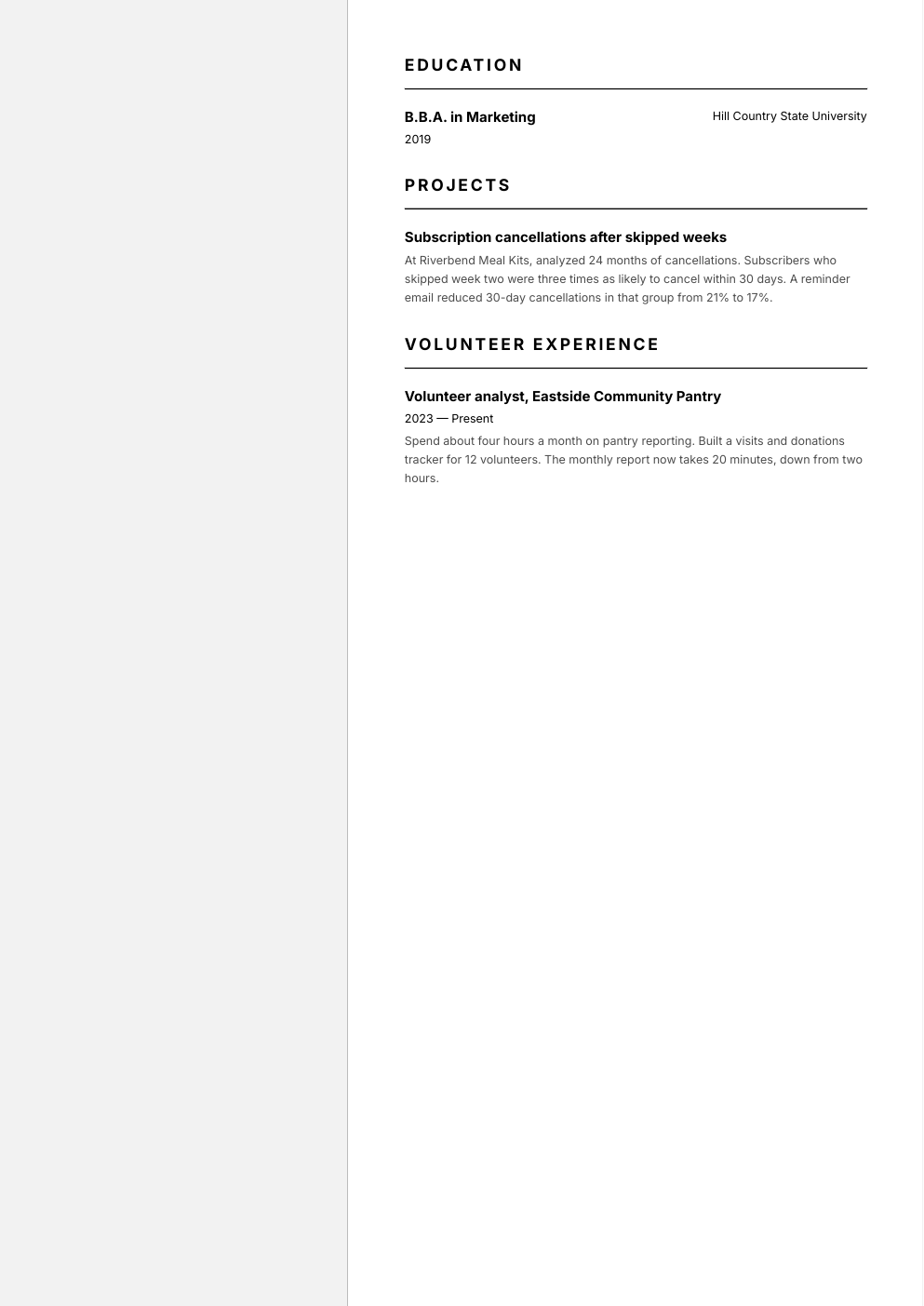
Use the checkout test. Set the sample size and duration before launch, then report the change in completion from 62% to 66%.
Compare orders with margin per order. The deepest discount produced the most orders and the lowest margin per order. The next promotion used a smaller discount.
Name the audience and schedule. Quarterly briefings for the COO and six regional directors show who could act on the findings.
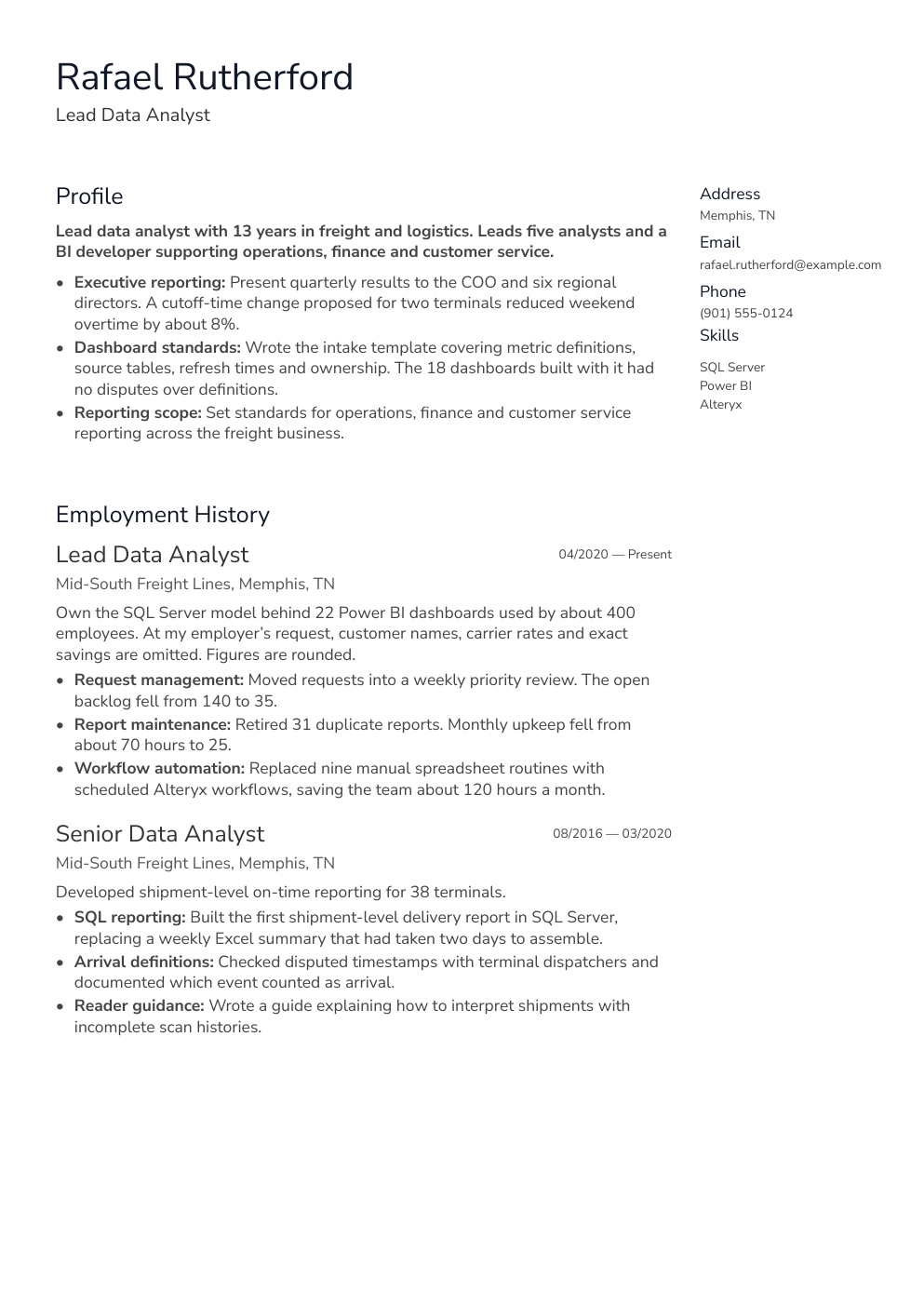
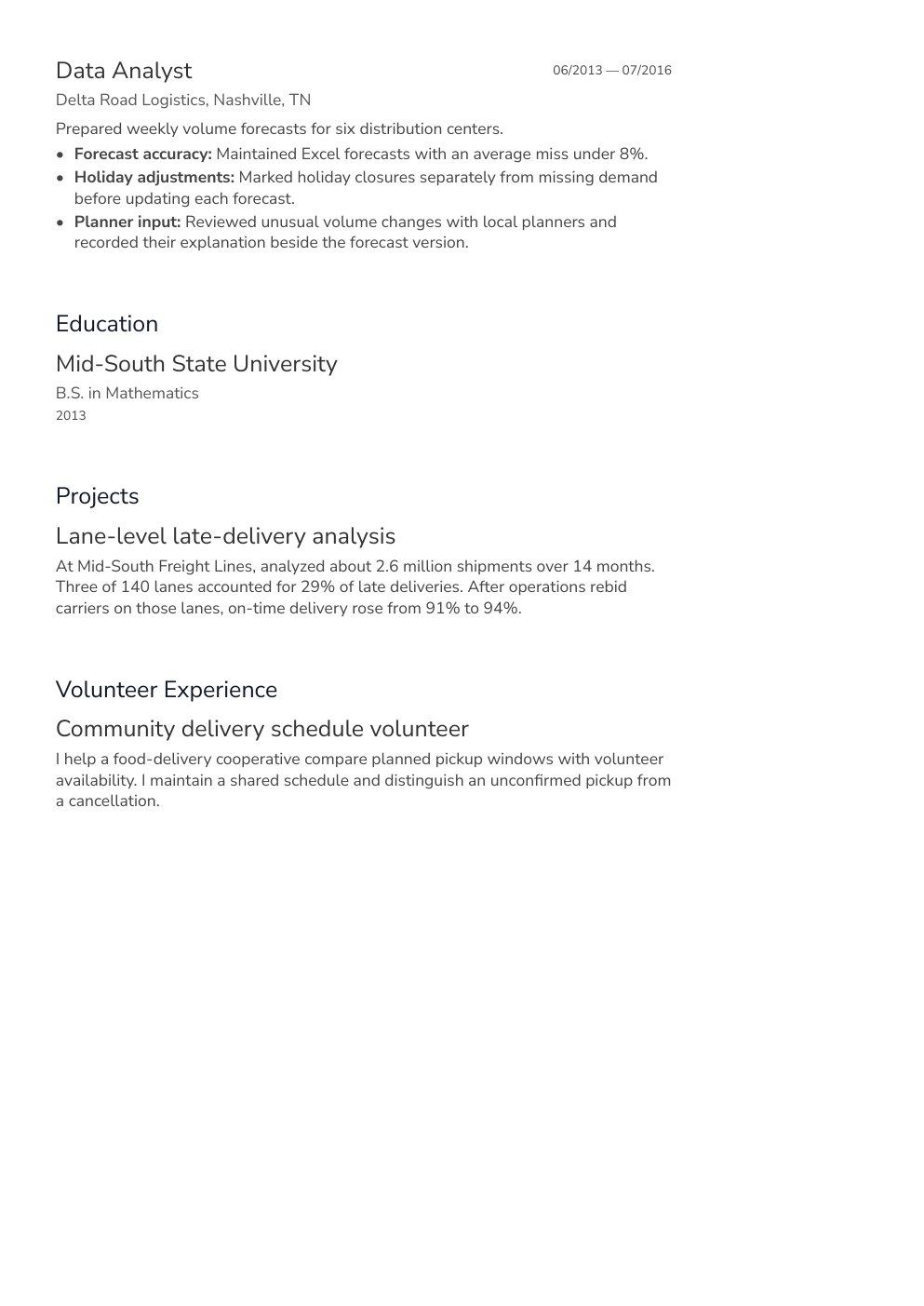
Label the project as independent. Give the source of the data, the question, the query or analysis and one finding you can defend.
Use a figure your employer permits and explain any rounding. You can still describe the decision, the audience and the reporting process when a client name or exact saving must stay private.
Use a class, volunteer or independent project that answered a real question. Say where the data came from, what you did and who used the result, if anyone did.
Describe a query and the question it answered. Matching advertising spend to first orders explains what the join was for.
Name its readers, when they used it and the decision it supported. If you know only who used the dashboard, report that and leave the decision out.
Give the error, the size of the affected data if known and the check you used. Removing 1,100 duplicate visit records says more than calling a dataset messy.
Identify the measure, what you planned before the test and the observed change. A rise from 62% to 66% is four percentage points.
Yes. State what your analysis showed, then name the team that acted. A comparison of acquisition costs and a marketing team’s budget change belong in the same bullet when the connection is documented.
List the tools you have used and use the employer’s spelling where it fits, such as SQL, BigQuery or Power BI. Place one example of the work beside that tool in your experience.
One page can cover an early-career role and a relevant project. Add a second when it gives the reader distinct evidence, such as experiments you designed or a reporting process you managed.
Import your CV, tailor it to a job with AI, add a cover letter. You approve every change.
Built for careful job applications
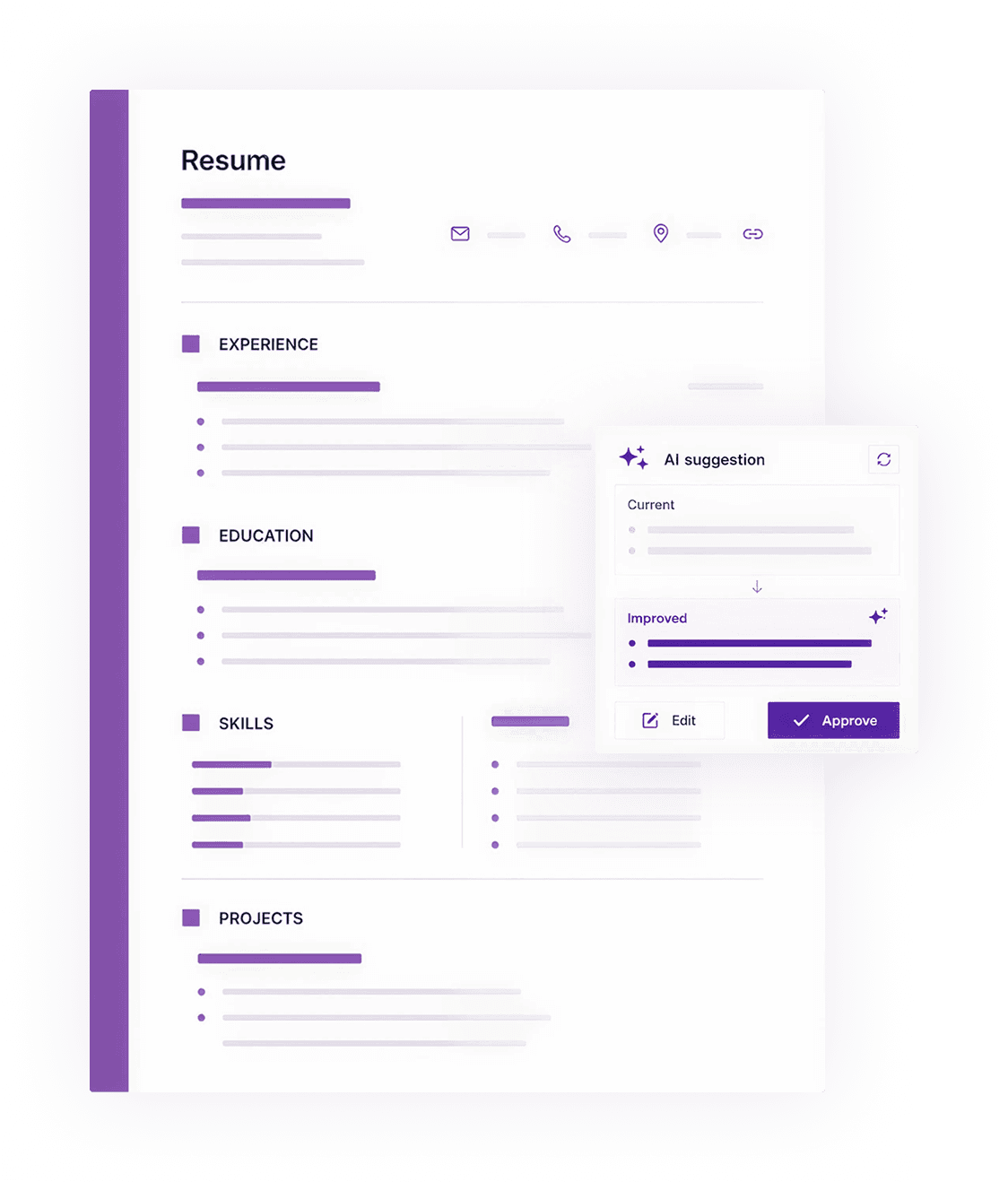
30 resume templates
Choose from professional layouts with real A4 previews.
ATS-friendly templates
Clean headings and text-based structure help hiring systems read the resume correctly.
AI suggestions you control
Rewrite summaries, bullets, and education text, then approve or edit before anything changes.
Job-description suggestions
Paste a role description and review suggestions before applying them.
Export-ready files
Download PDF, DOCX, or TXT when your resume and cover letter are ready.
Start from the CV you already have. Point it at a job description and export a resume and cover letter written for that role.
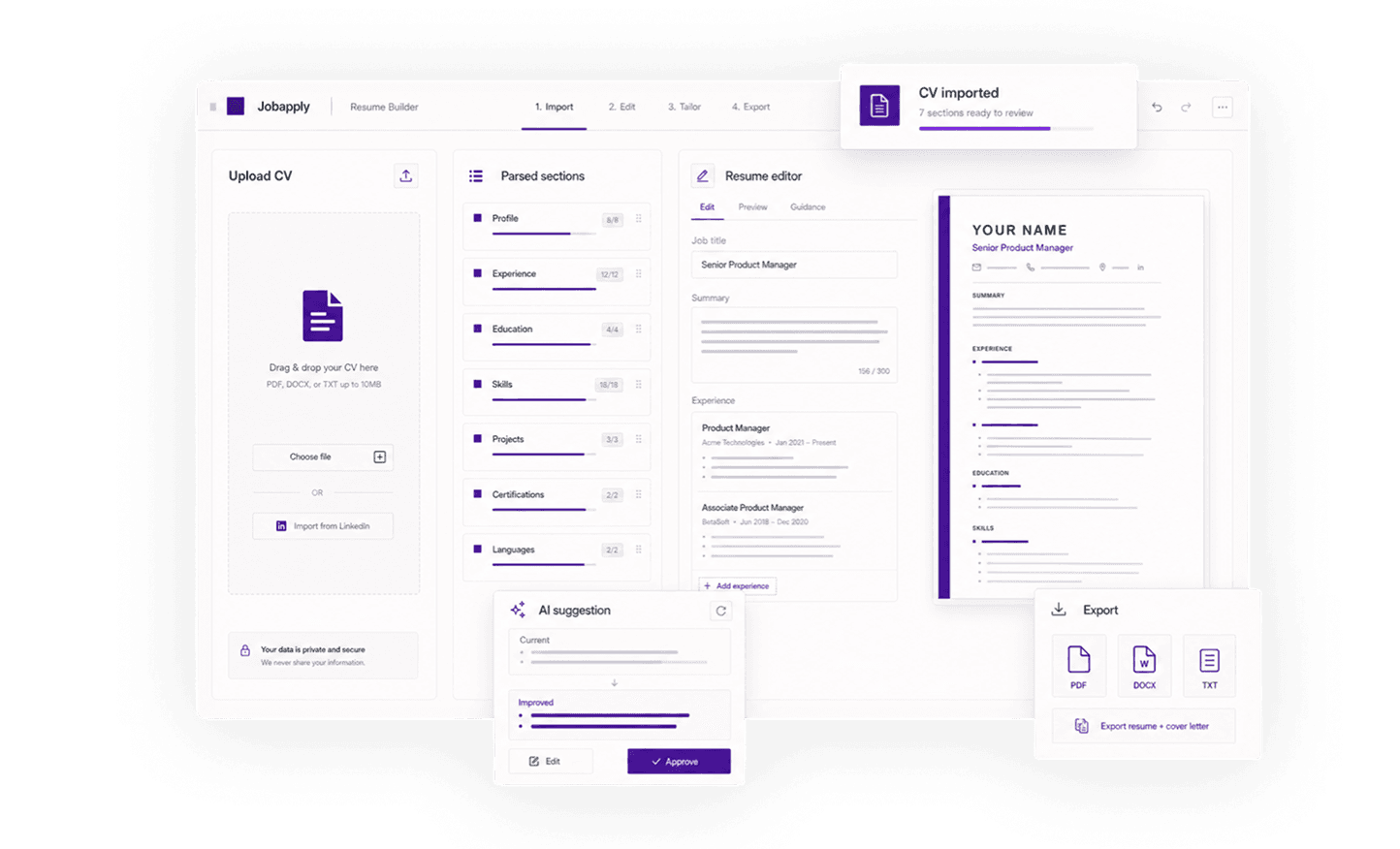
Every AI change appears beside your current text. Accept it, edit it, or skip it.
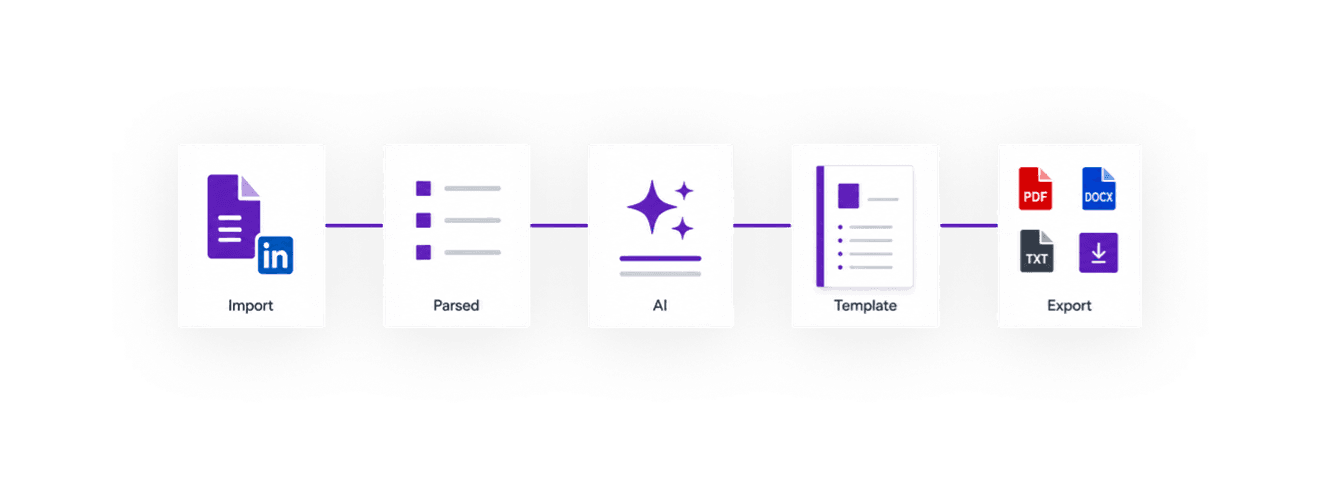
Start with a file or pasted text, then review the imported sections.
Fill in personal details, experience, education, skills, and optional sections.
Review job-description suggestions before applying them to your resume.


Download resume and cover letter files as PDF, DOCX, or TXT.




Start editing right away
Choose a template, import or add details, and keep editing without an activation gate.
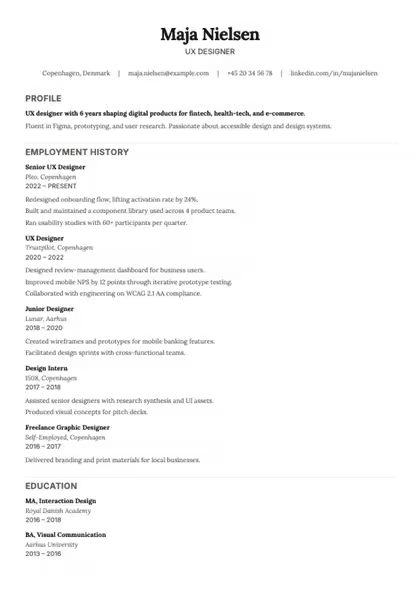
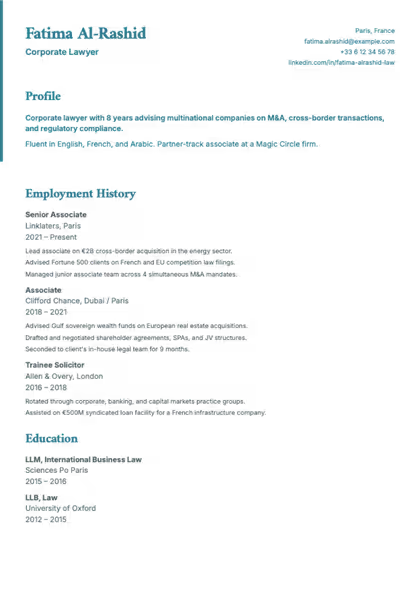
Built for academic CVs — calm serif titles and room for long publication lists.
Use this template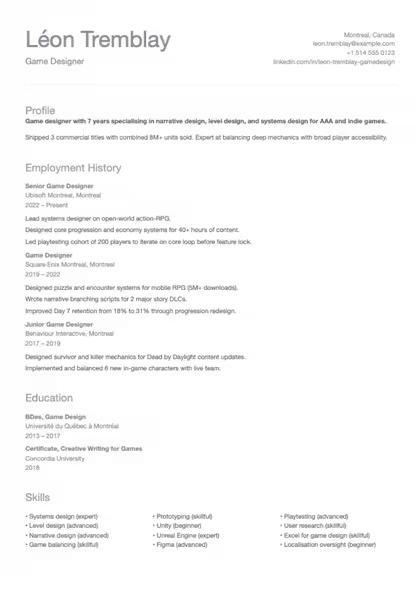
Swiss-minimal and strictly grayscale, for when restraint is the statement.
Use this template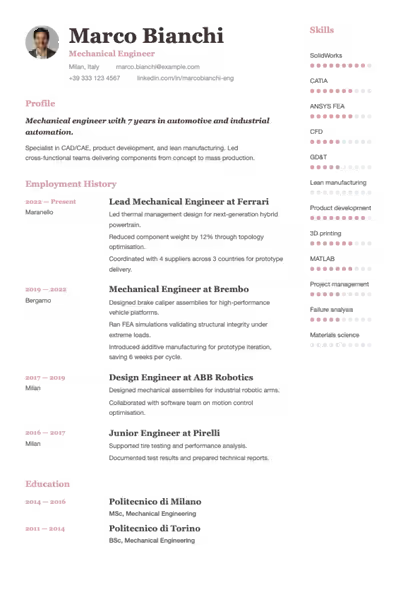
Editorial serifs with a dusty-rose touch — polished without trying too hard.
Use this template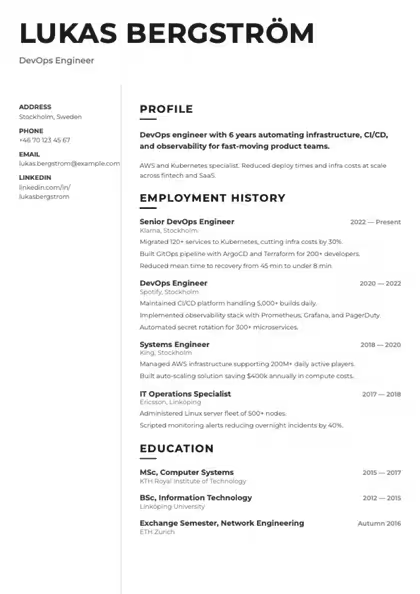
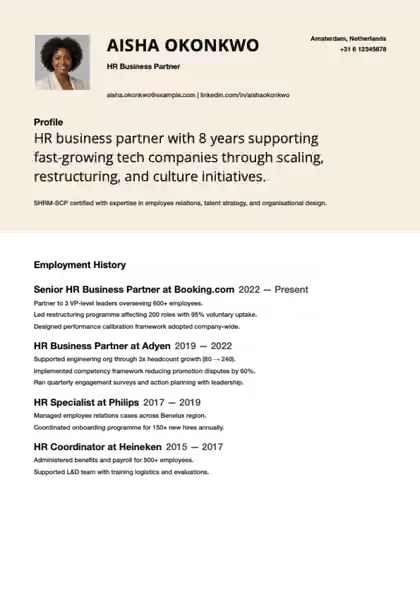
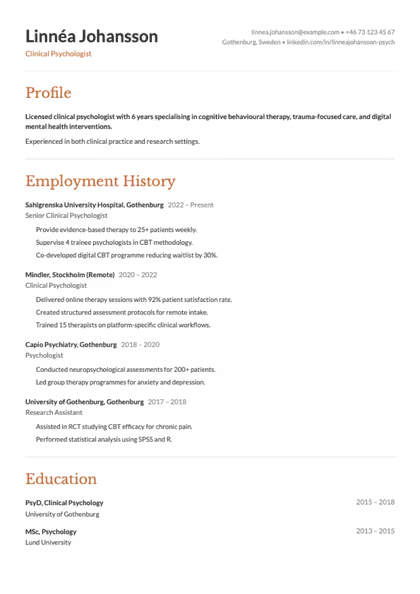
Warm and structured, with an orange accent that keeps formal from feeling stiff.
Use this template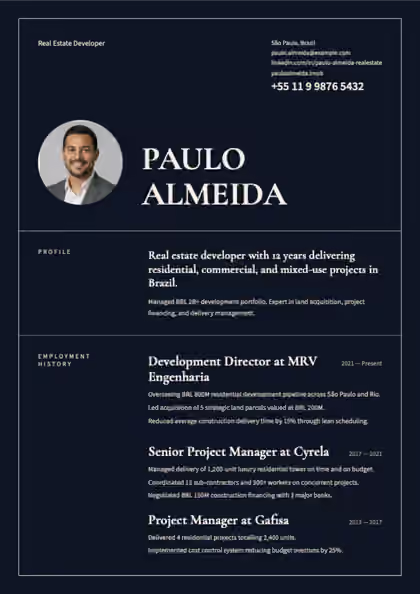
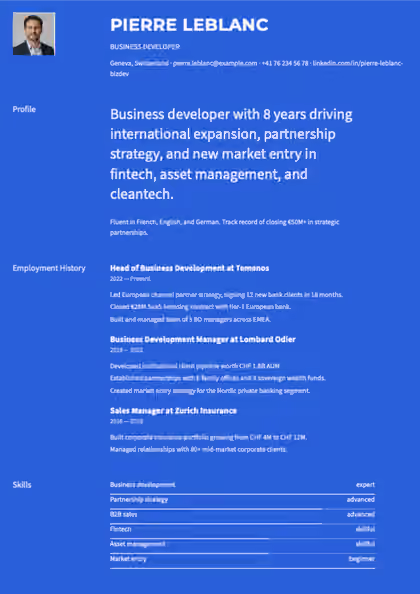
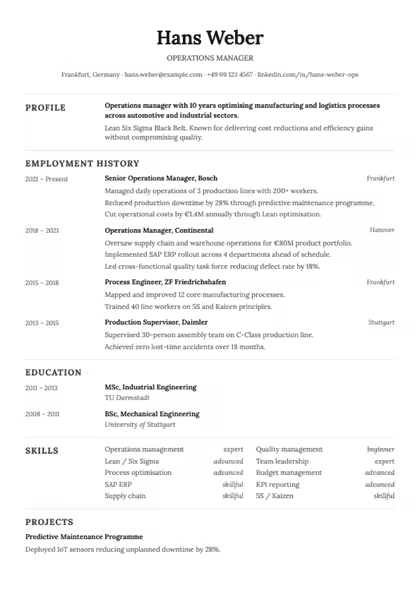
The classic European CV with a date-column timeline recruiters already know how to read.
Use this template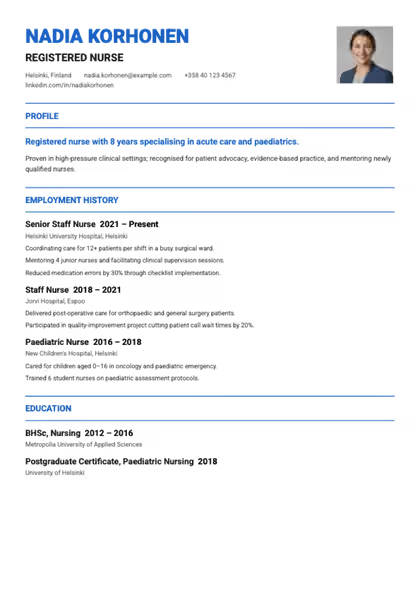
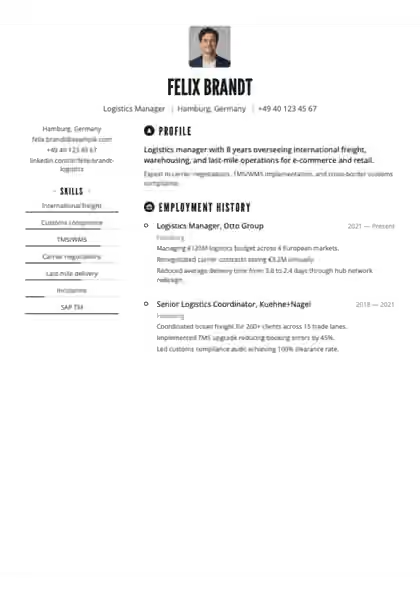
A clean single column with photo — the safe pick that still looks sharp.
Use this template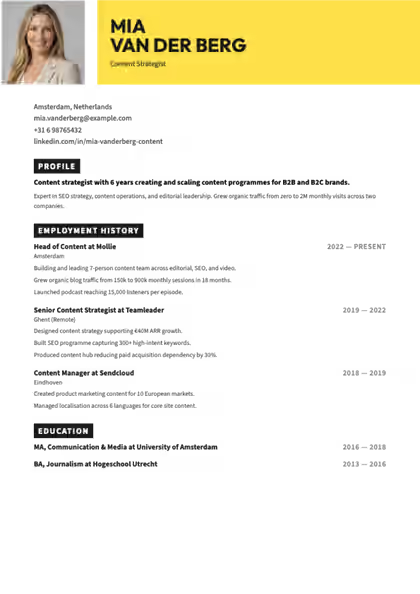
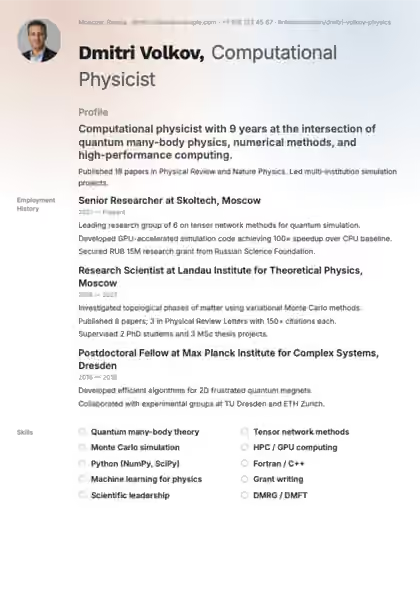
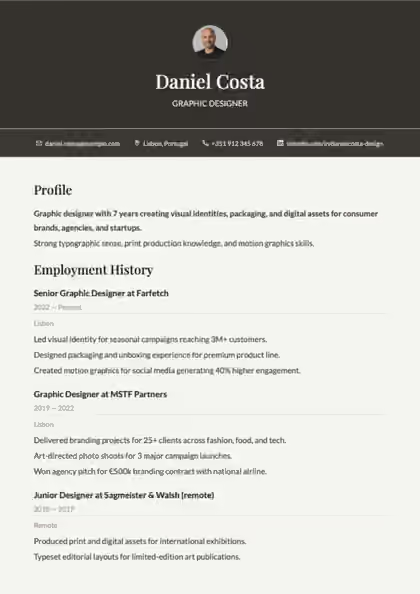
A warm gradient up top, strict left-label structure below — personality and precision.
Use this template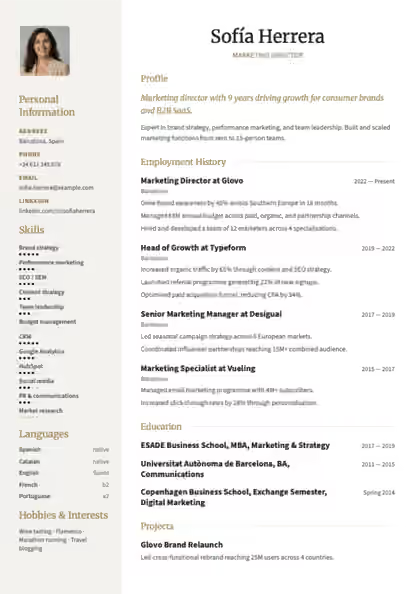
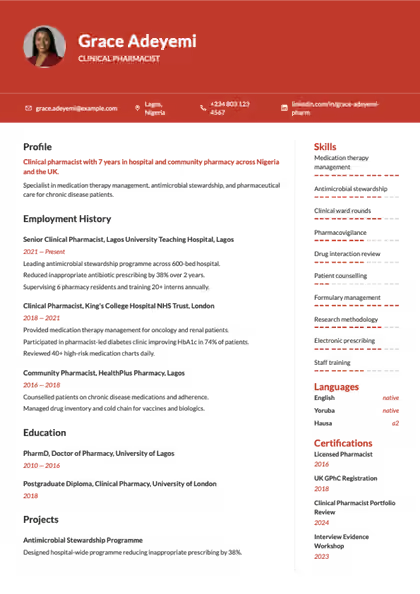
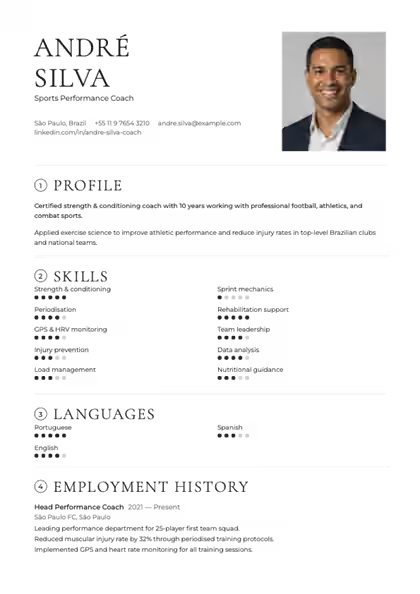
An editorial single column with circled section numbers — crafted, not decorated.
Use this template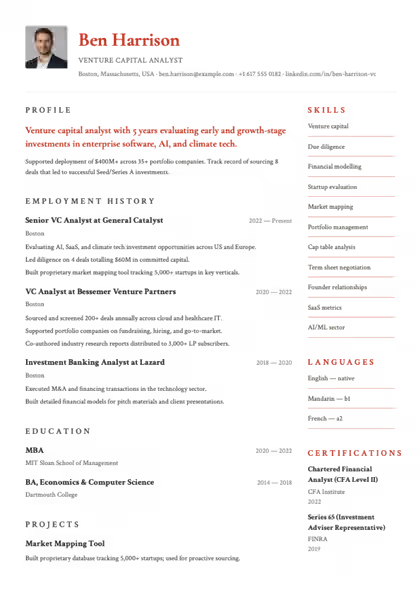
Classic serif two-column with a crimson accent, made for high-stakes applications.
Use this template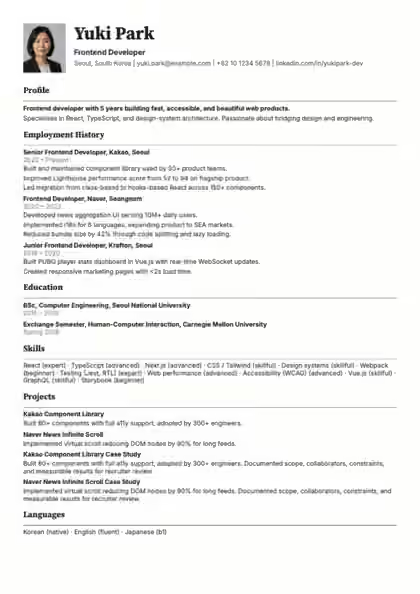
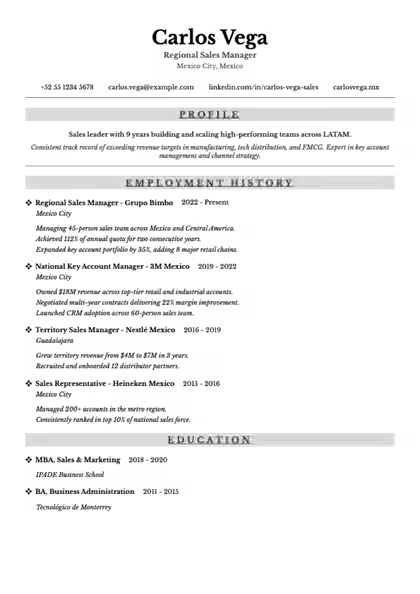
Classical detailing, diamond ornaments, dotted leader lines — fine print done right.
Use this template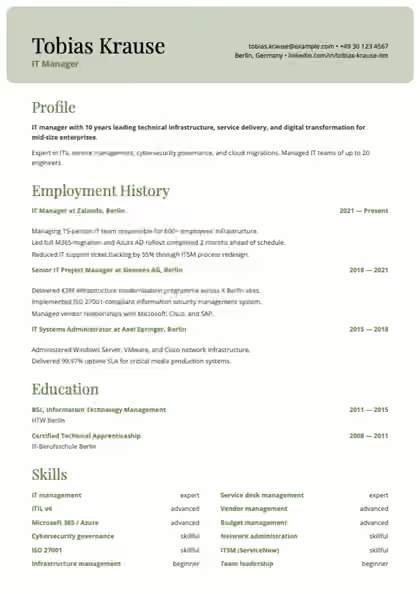
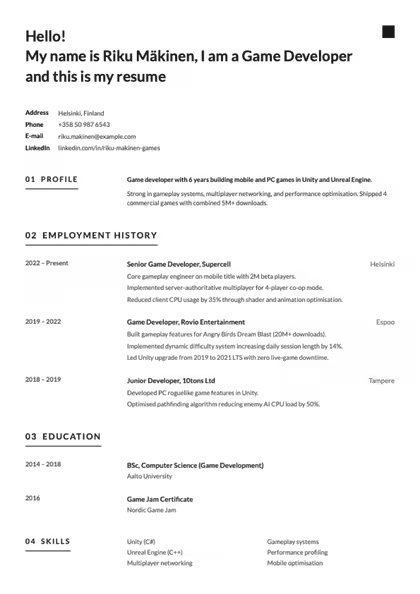
Opens with a greeting, breathes with numbered sections — personal and organized.
Use this template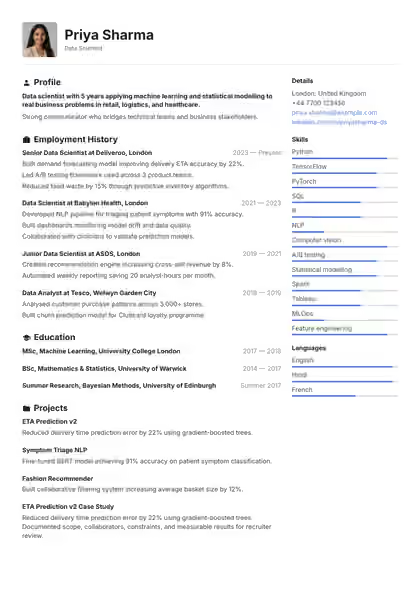
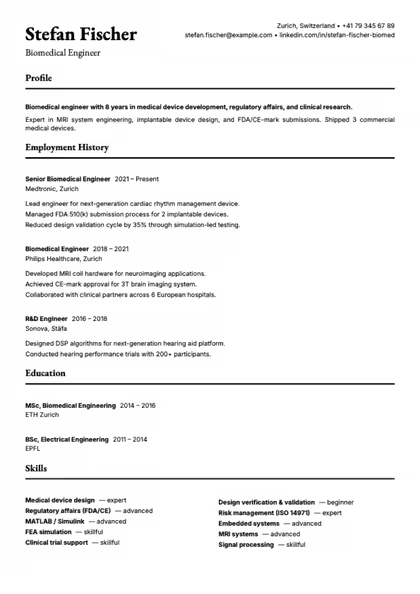
Traditional serifs and bold underline separators, made for deep expertise.
Use this template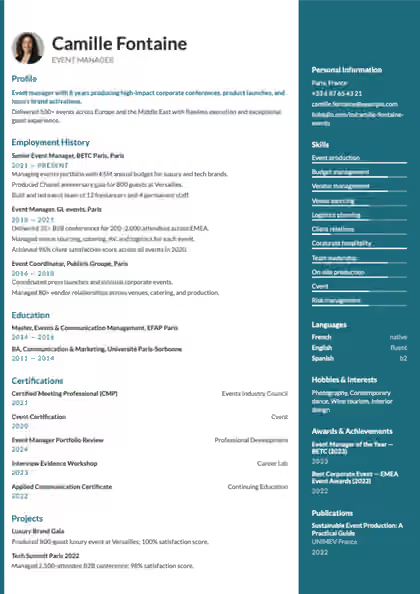
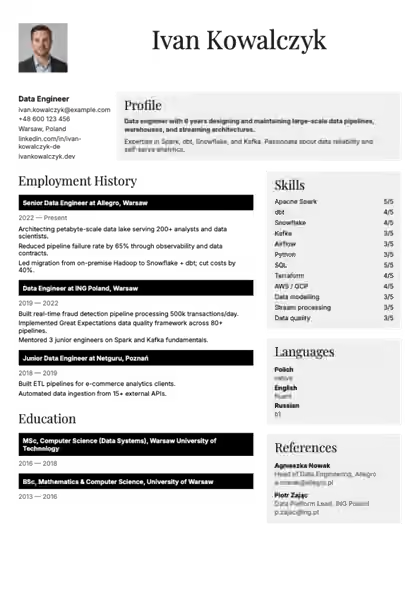
Hiring a Data Analyst · Oscar Baruffa · Data Analyst Resume Tips · John Pauler · How to Build a Standout Analytics Portfolio Project · Kristen Kehrer · The Government Data Quality Framework.