// AI RESUME BUILDER • IMPORT · TAILOR · COVER LETTER
Build a resume ready to send.
Import your CV, tailor it to a job with AI, add a cover letter. You approve every change.


Built for careful job applications
Show the type of work you managed, the crews involved and the budget or schedule you controlled. A commercial build-out, a housing tract and a city contract call for different evidence.

Name the work before giving its value. A tenanted build-out differs from a new road.
Commercial build-outs across 14 projects.
Distinguish the awarded contract, combined project value and costs you personally tracked.
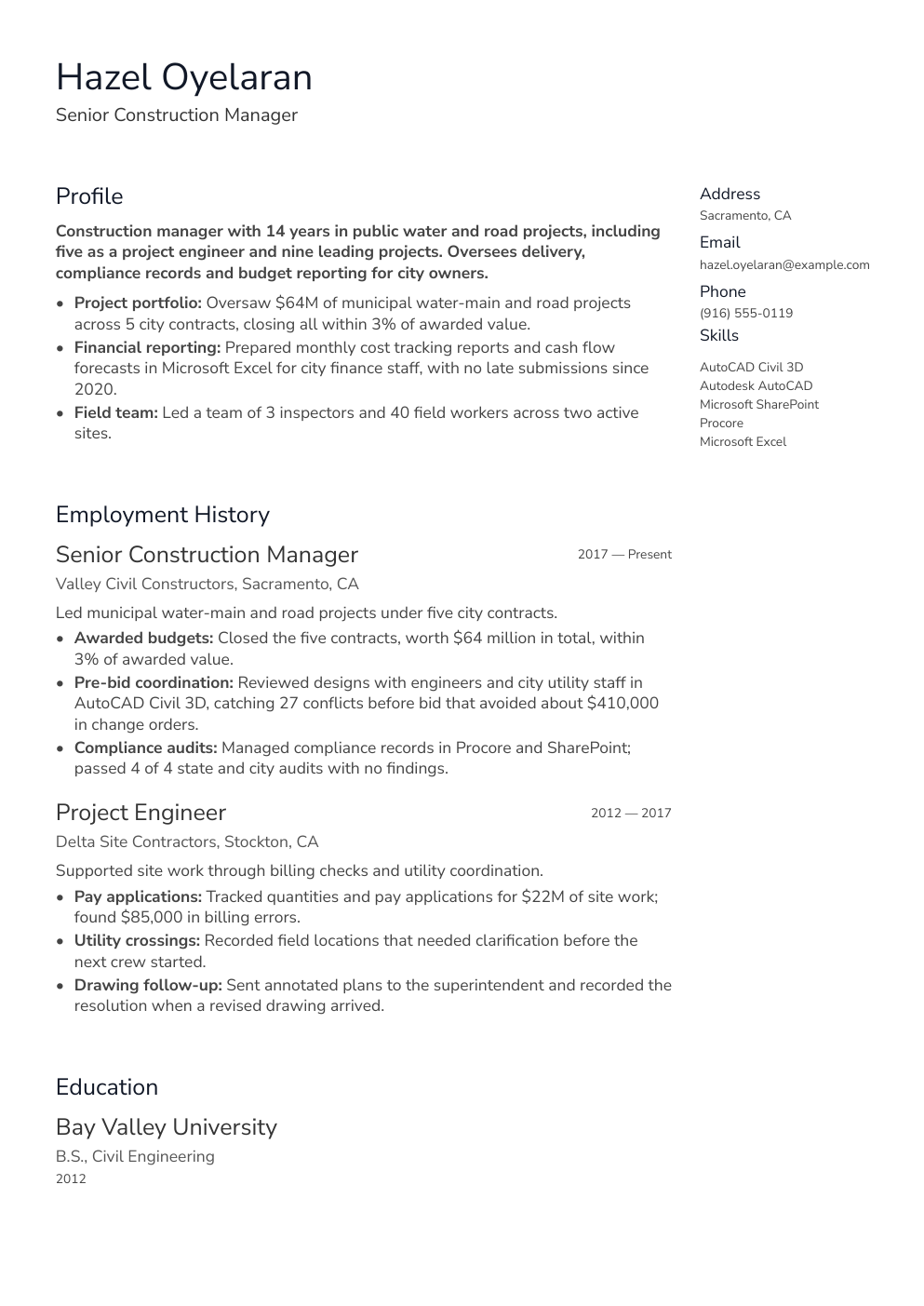
Five city contracts worth $64 million combined.
Compare actual and planned dates for the same milestone.
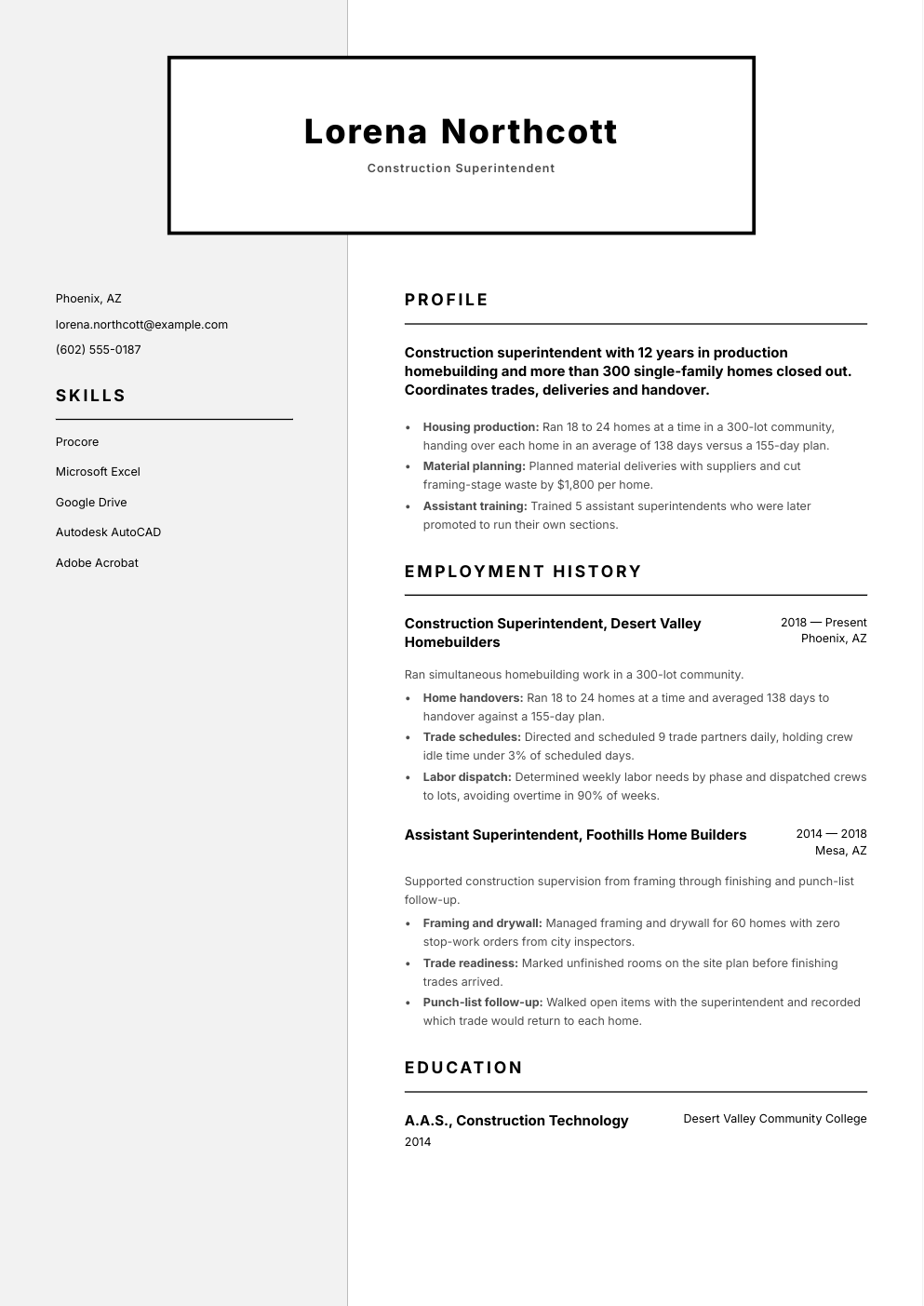
138 days to home handover against a 155-day plan.
Say which crews you scheduled or supervised and at what stage.
Nine trade partners scheduled daily.
Name what the owner received and how often.
Weekly progress and cost reports.
Give the site, year and measure when describing a safety record.
Zero lost-time injuries in 2023.
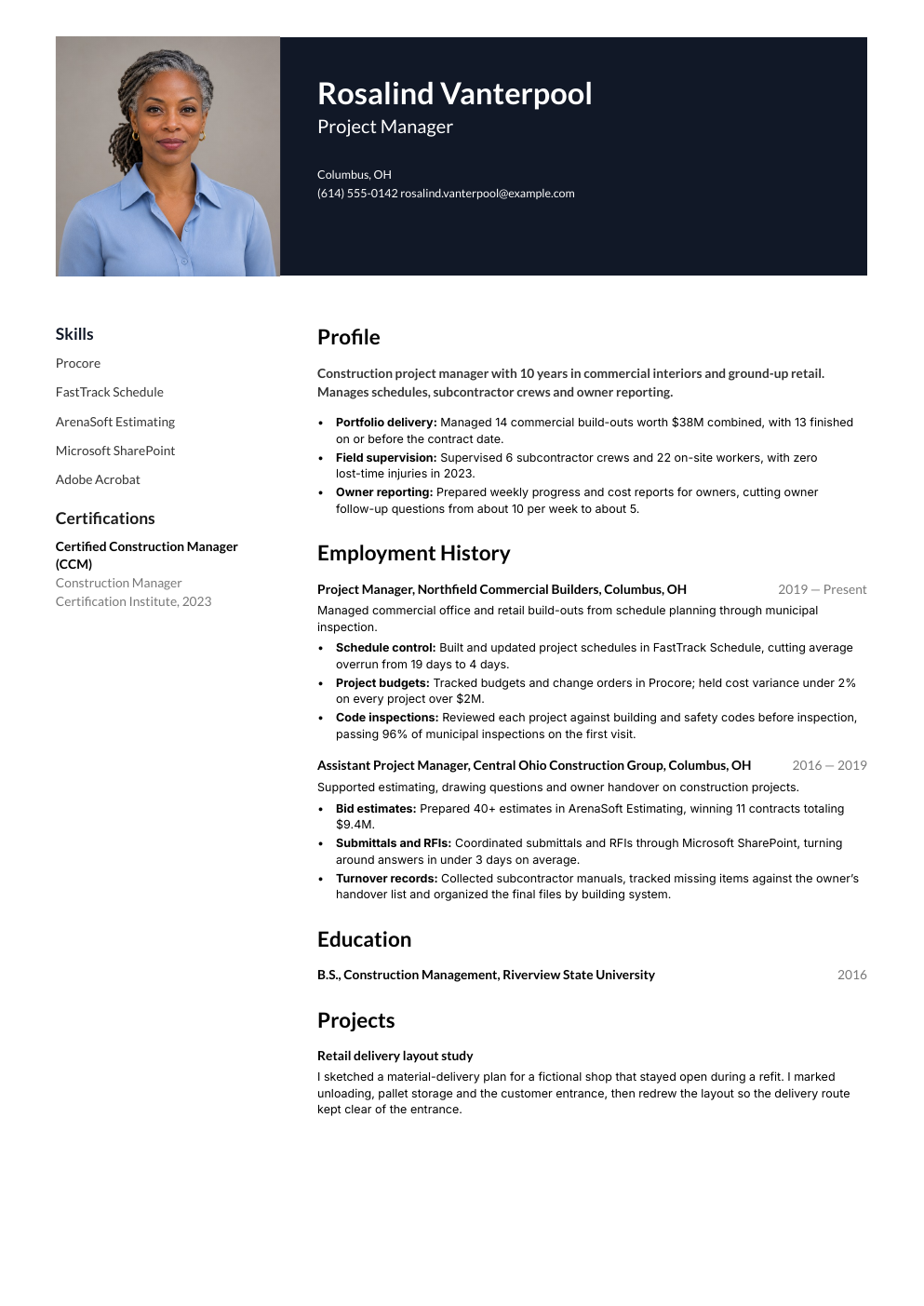
Choose a handover, inspection or trade start with a recorded date. “Finished faster” leaves the reader guessing what finished.
Use planned versus actual days or average overrun before and after a scheduling change. Label whichever comparison you have.
Identify the sequence, dispatch decision or supplier coordination you handled. Give a subcontractor credit for work the crew performed.
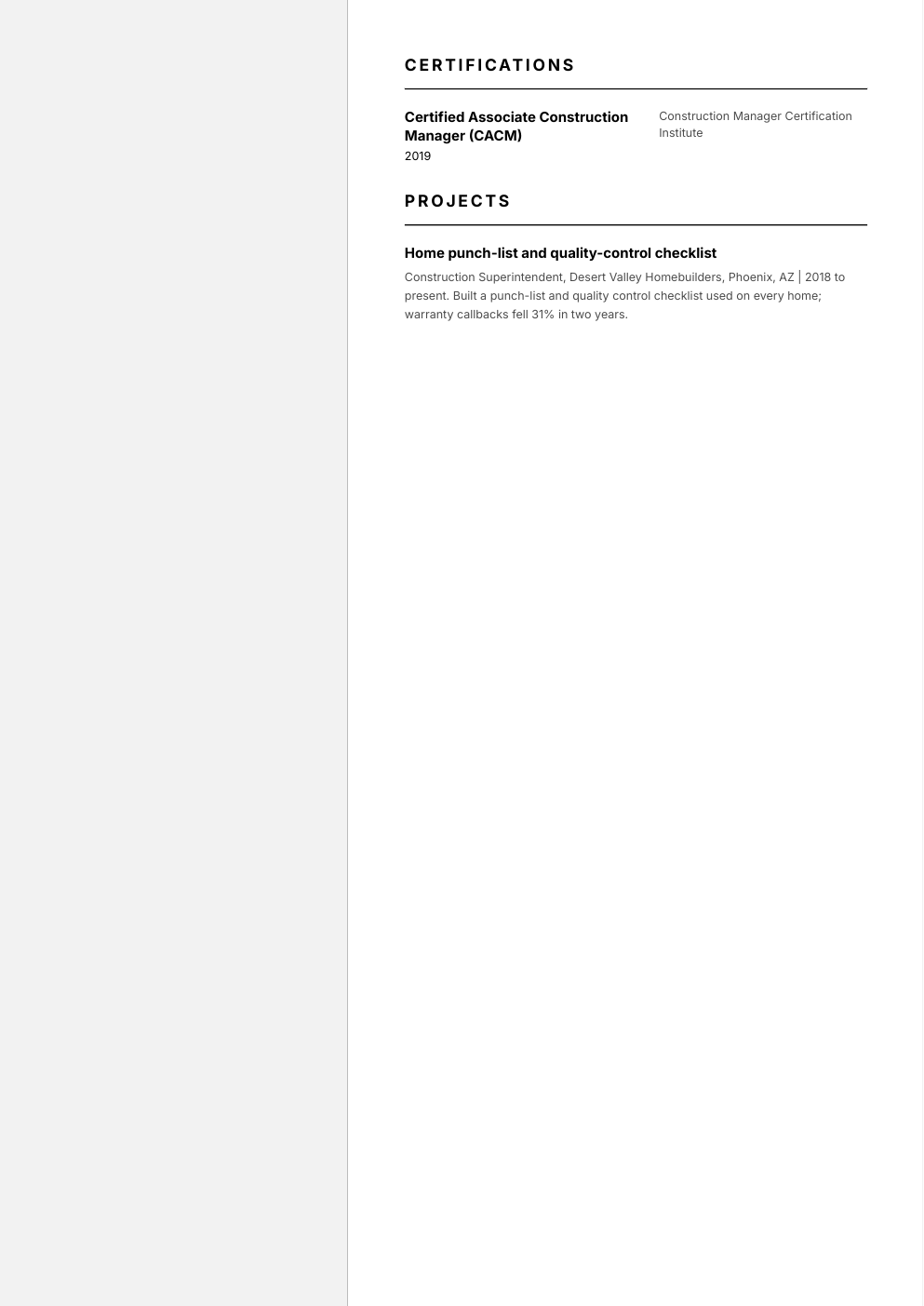
Say whether the comparison used awarded value, the approved budget or a particular change order.
Name the quantities, application for payment or design conflict you reviewed. A software name alone leaves out the decision.
A pre-bid conflict can support an estimate of avoided cost. A billing error found in a payment application is a different result; label it accordingly.
Name the project type, scale, and delivery stage. State the part of the schedule, budget, or site you owned.
Identify the budget you controlled or tracked. You can also give the total project value if you clearly label it.
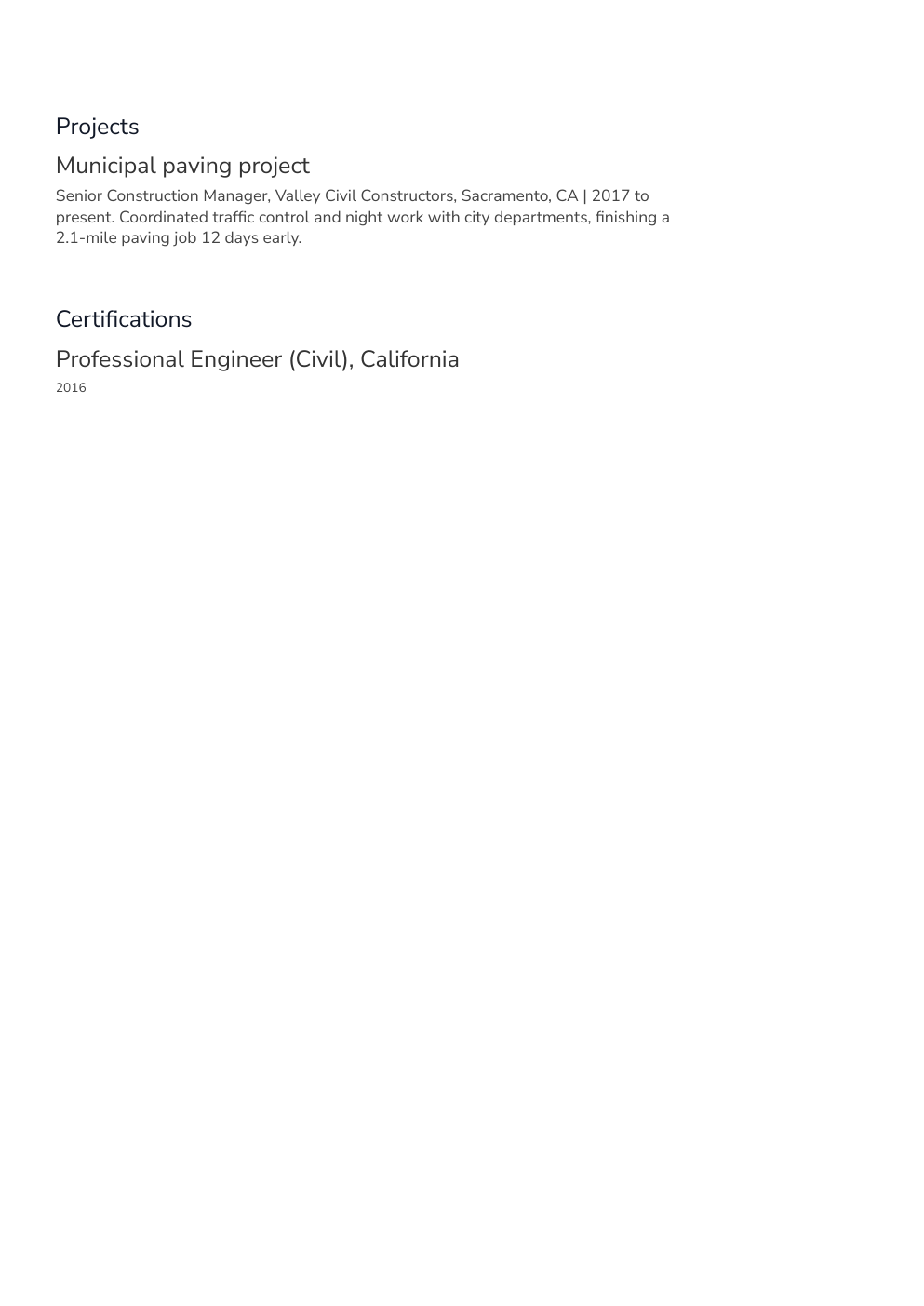
List current training where relevant. In experience, describe inspections, corrective actions, and closeout work you handled.
Name the phase, trades, or handoffs you coordinated. Explain what you did when work drifted from the plan.
Use the tools in the posting when you have used them. Tie each important tool to an RFI, schedule update, or change order you handled.
Highlight coordination, planning, and budget exposure. Show decisions you owned beyond daily site supervision.
Yes. Mark it ongoing and describe completed milestones and current responsibilities.
Name the trades and explain how you sequenced work, checked readiness, or resolved an issue between crews.
Use project size, number of sites, phases, or trades coordinated. Choose numbers you can discuss in an interview.
Name the punch list, inspections, turnover records, or commissioning activities you ran and how you tracked completion.
Import your CV, tailor it to a job with AI, add a cover letter. You approve every change.
Built for careful job applications
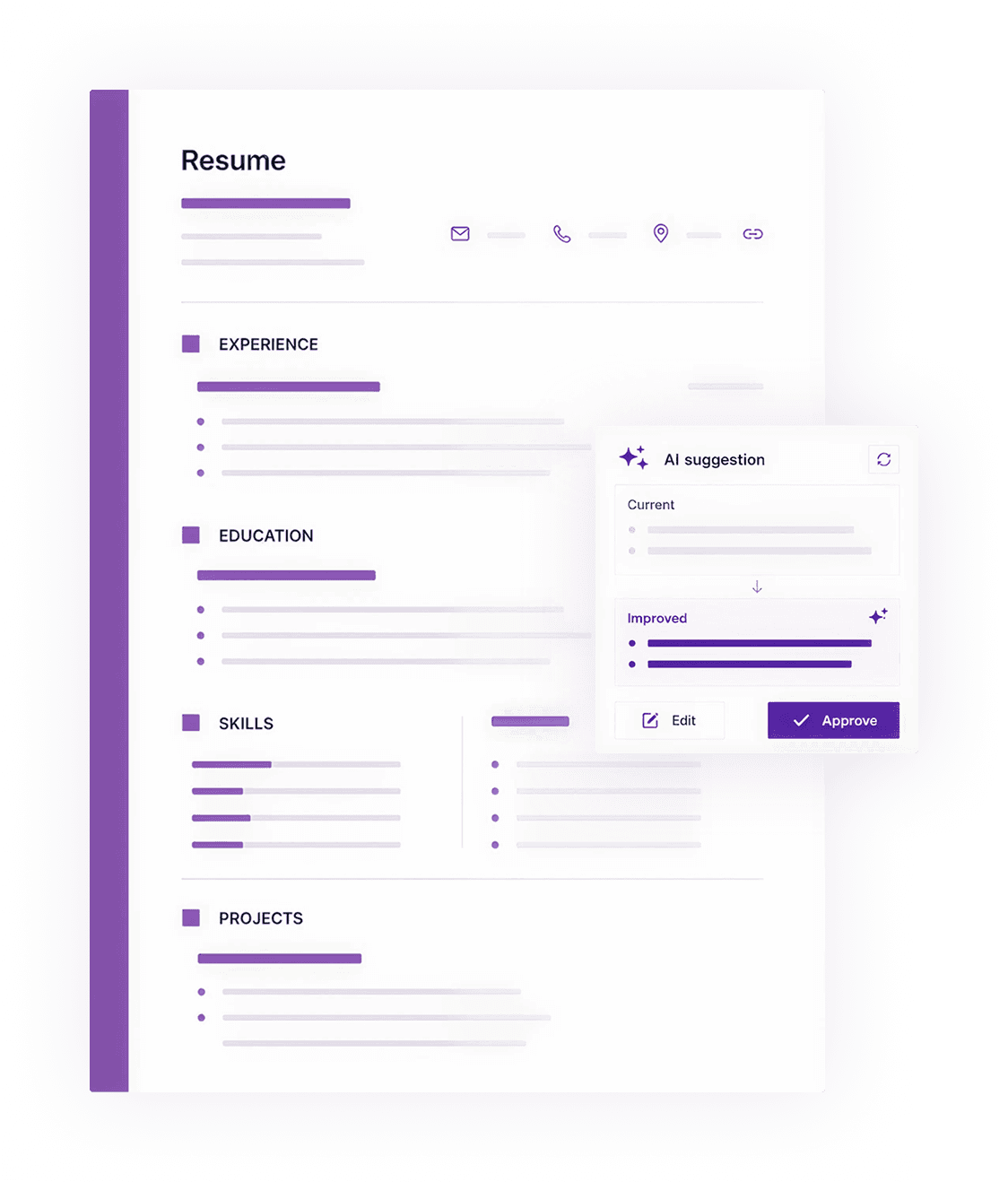
30 resume templates
Choose from professional layouts with real A4 previews.
ATS-friendly templates
Clean headings and text-based structure help hiring systems read the resume correctly.
AI suggestions you control
Rewrite summaries, bullets, and education text, then approve or edit before anything changes.
Job-description suggestions
Paste a role description and review suggestions before applying them.
Export-ready files
Download PDF, DOCX, or TXT when your resume and cover letter are ready.
Start from the CV you already have. Point it at a job description and export a resume and cover letter written for that role.
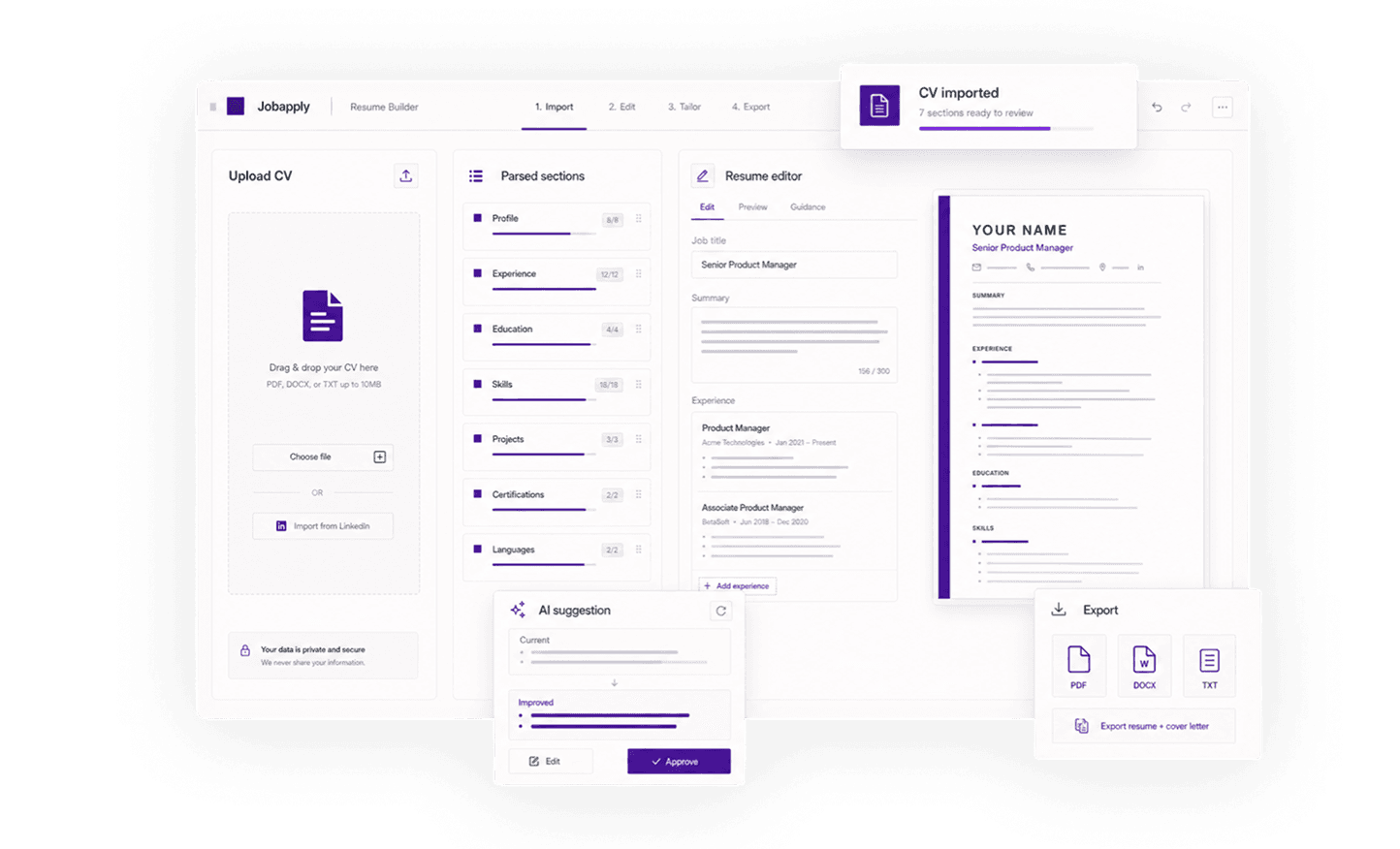
Every AI change appears beside your current text. Accept it, edit it, or skip it.
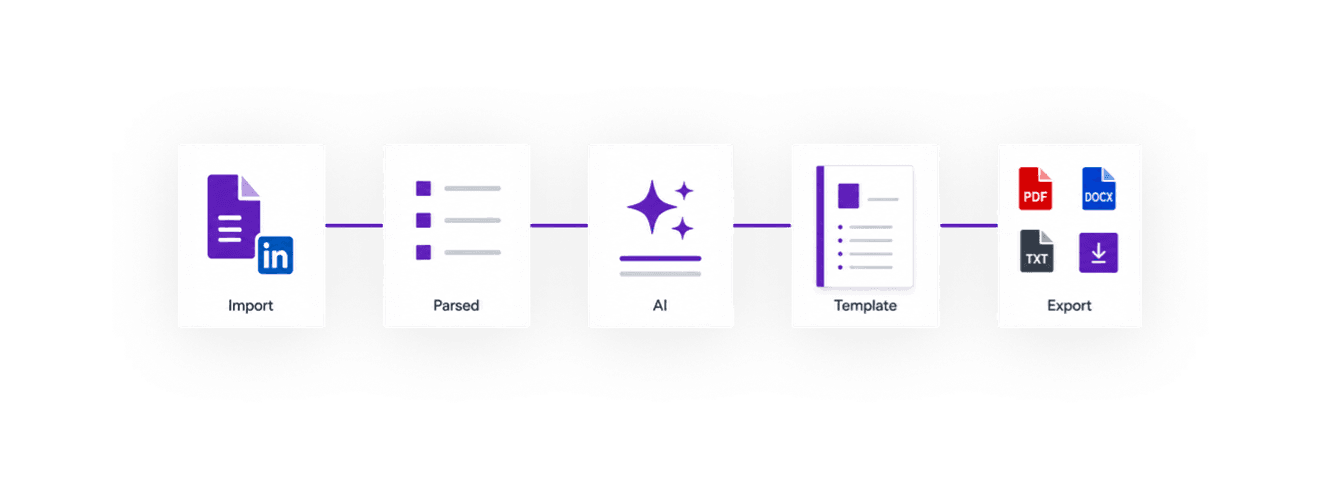
Start with a file or pasted text, then review the imported sections.
Fill in personal details, experience, education, skills, and optional sections.
Review job-description suggestions before applying them to your resume.


Download resume and cover letter files as PDF, DOCX, or TXT.




Start editing right away
Choose a template, import or add details, and keep editing without an activation gate.
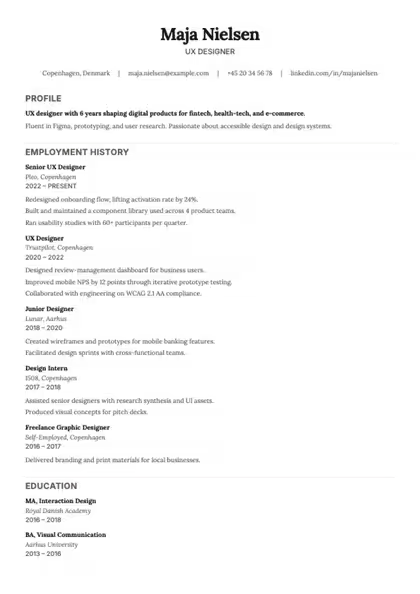
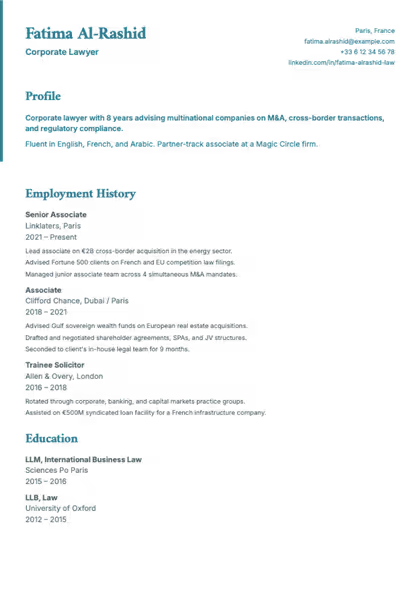
Built for academic CVs — calm serif titles and room for long publication lists.
Use this template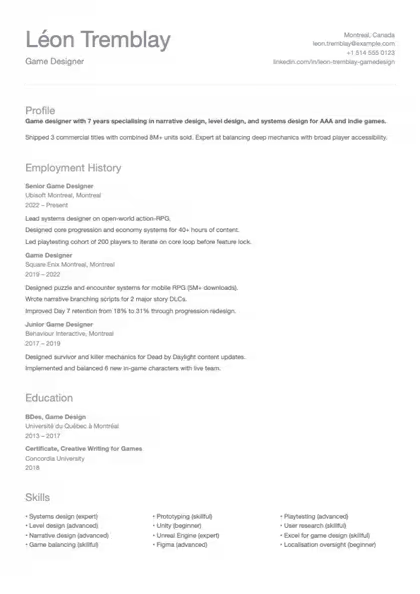
Swiss-minimal and strictly grayscale, for when restraint is the statement.
Use this template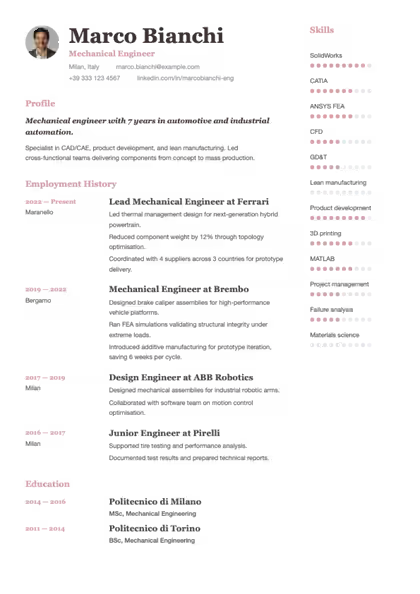
Editorial serifs with a dusty-rose touch — polished without trying too hard.
Use this template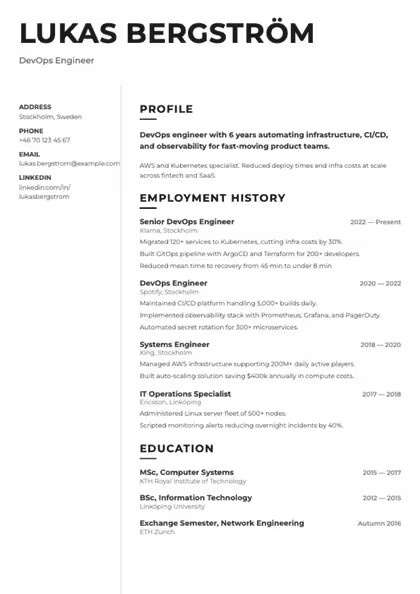
Warm and structured, with an orange accent that keeps formal from feeling stiff.
Use this template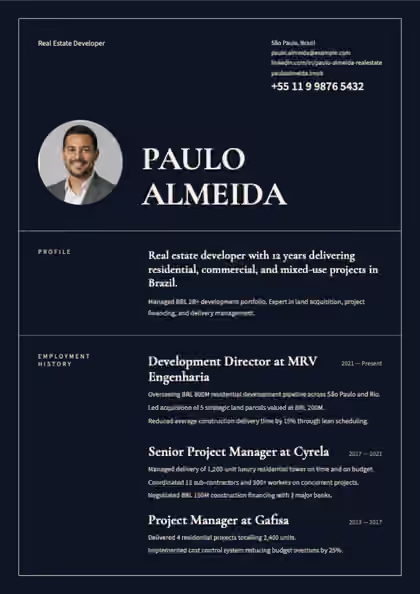
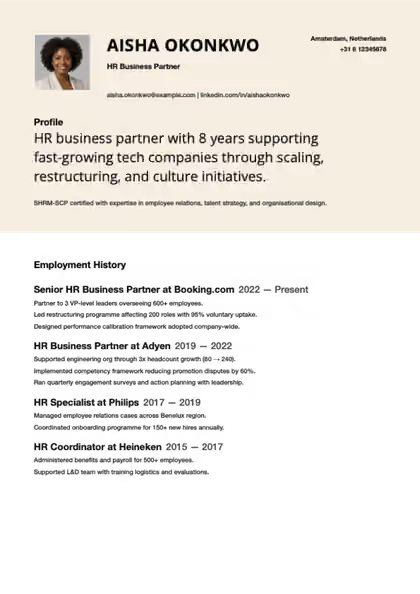
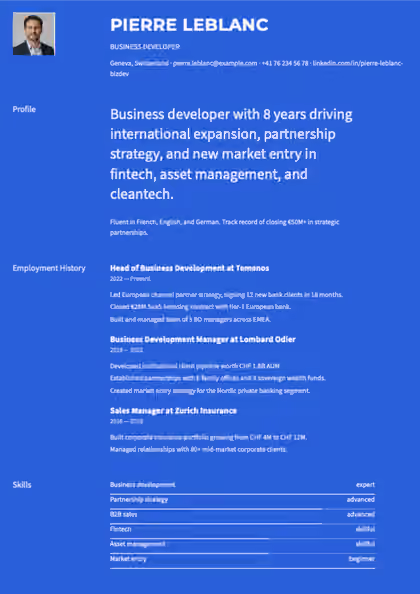
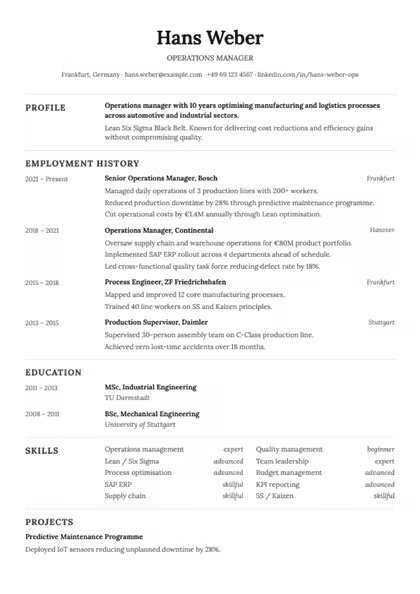
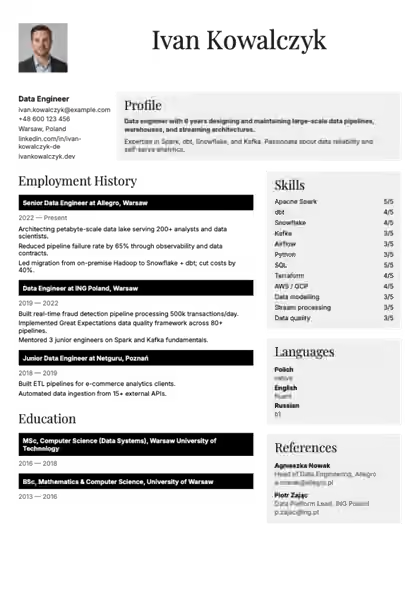
The classic European CV with a date-column timeline recruiters already know how to read.
Use this template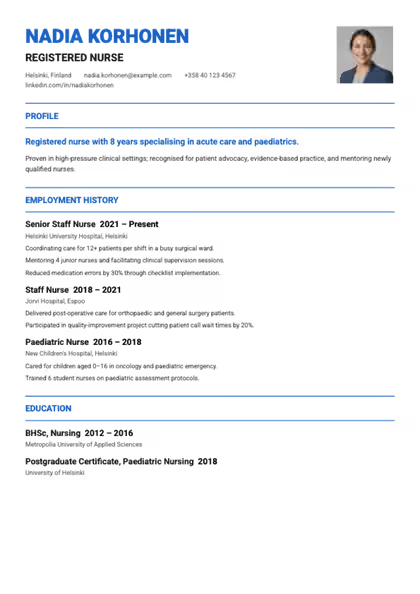
A clean single column with photo — the safe pick that still looks sharp.
Use this template
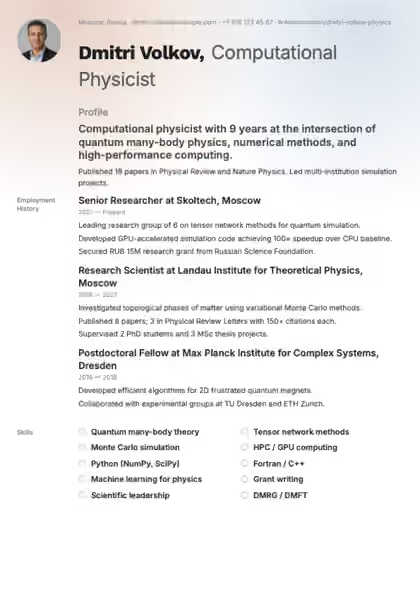
A warm gradient up top, strict left-label structure below — personality and precision.
Use this template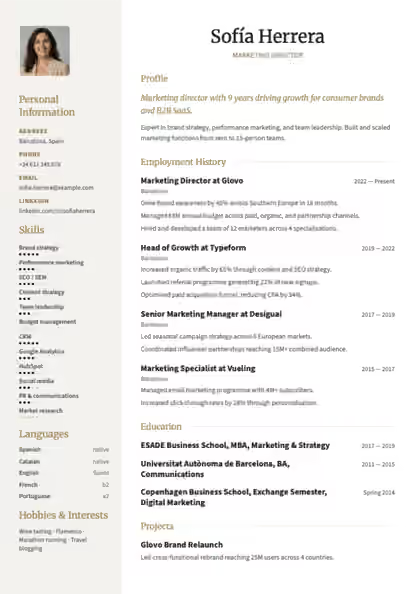
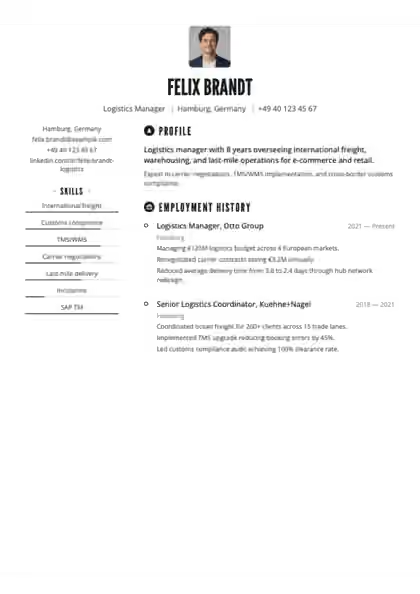
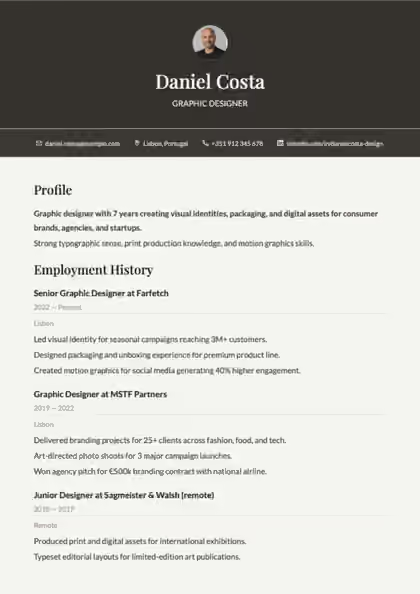

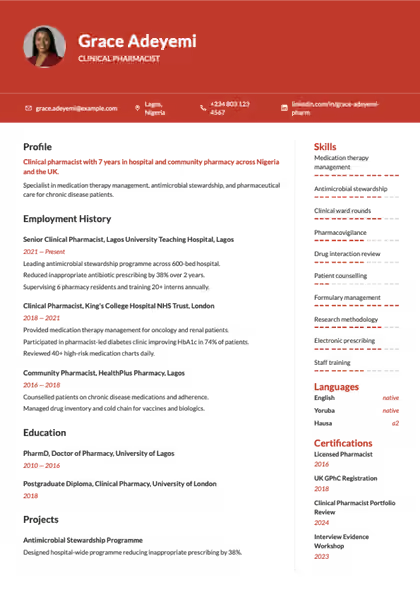
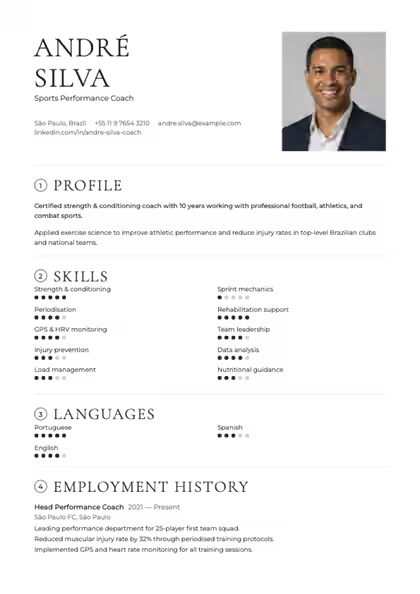
An editorial single column with circled section numbers — crafted, not decorated.
Use this template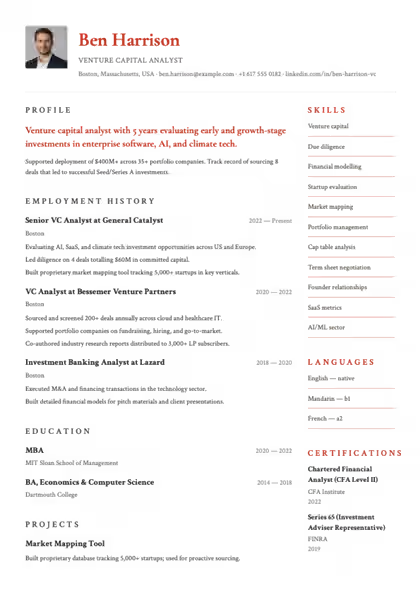
Classic serif two-column with a crimson accent, made for high-stakes applications.
Use this template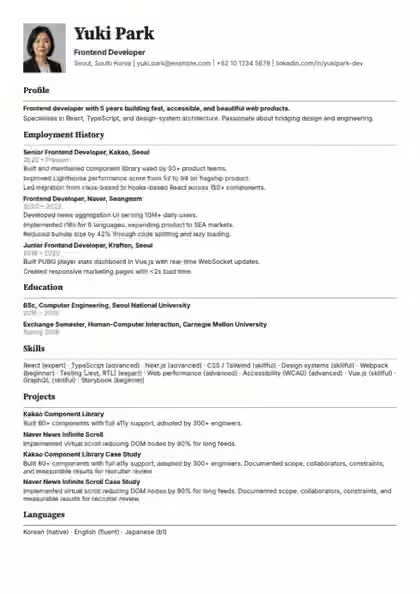
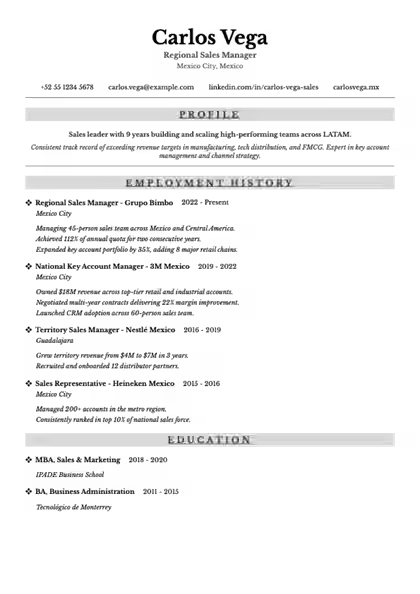
Classical detailing, diamond ornaments, dotted leader lines — fine print done right.
Use this template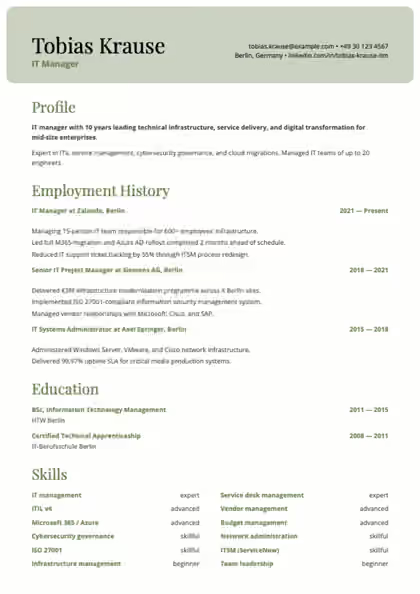
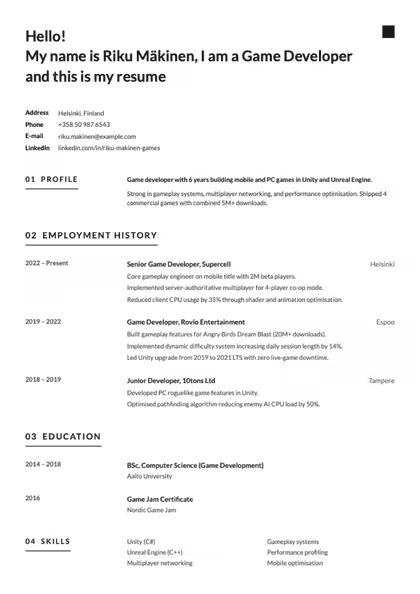
Opens with a greeting, breathes with numbered sections — personal and organized.
Use this template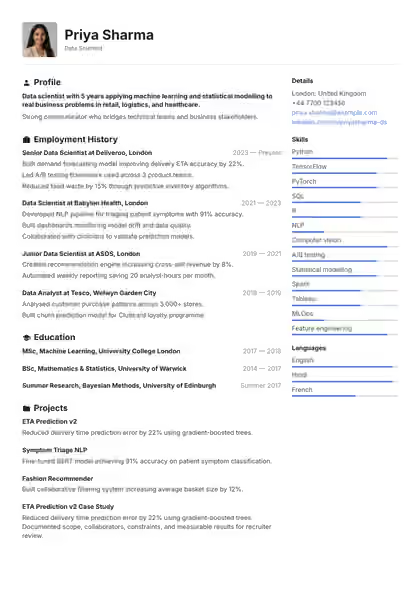
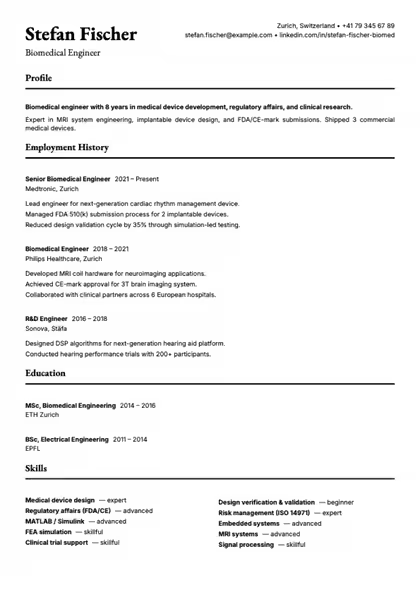
Traditional serifs and bold underline separators, made for deep expertise.
Use this template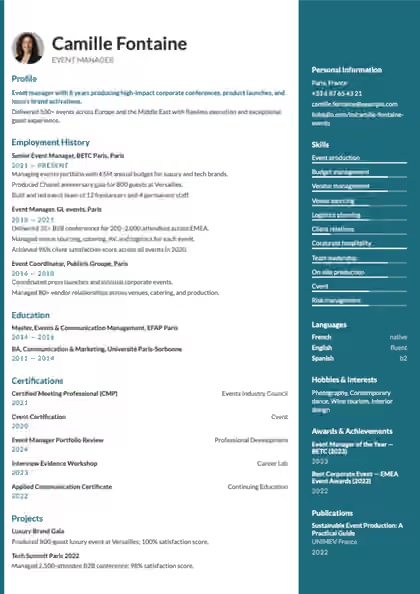
Bureau of Labor Statistics, Construction Managers · O*NET OnLine, Construction Managers · Construction Manager Certification Institute.