// AI RESUME BUILDER • IMPORT · TAILOR · COVER LETTER
Build a resume ready to send.
Import your CV, tailor it to a job with AI, add a cover letter. You approve every change.


Built for careful job applications
Describe the station you worked, the rush you covered and how you kept orders accurate. A café hiring for opening shifts needs different evidence from a tasting room hiring a trainer.

Tell the café whether you worked the espresso bar, headset, till or pickup counter.
Headset orders relayed to the bar.
Give the hours as well as the usual pace. Count drinks, guests or cars consistently.
The 7–9 a.m. rush.
Put the crew size beside a drive-through count so a manager can judge your role.
Five people serving at least 350 vehicles per shift.
Choose a task you completed before the first order.
Calibrated espresso and stocked milk before opening.
Name the routine taught and how the new hire demonstrated it.
Drink recipes followed by a 30-day check.
Connect the maintenance work you performed to the record you kept.
Weekly descaling logs.
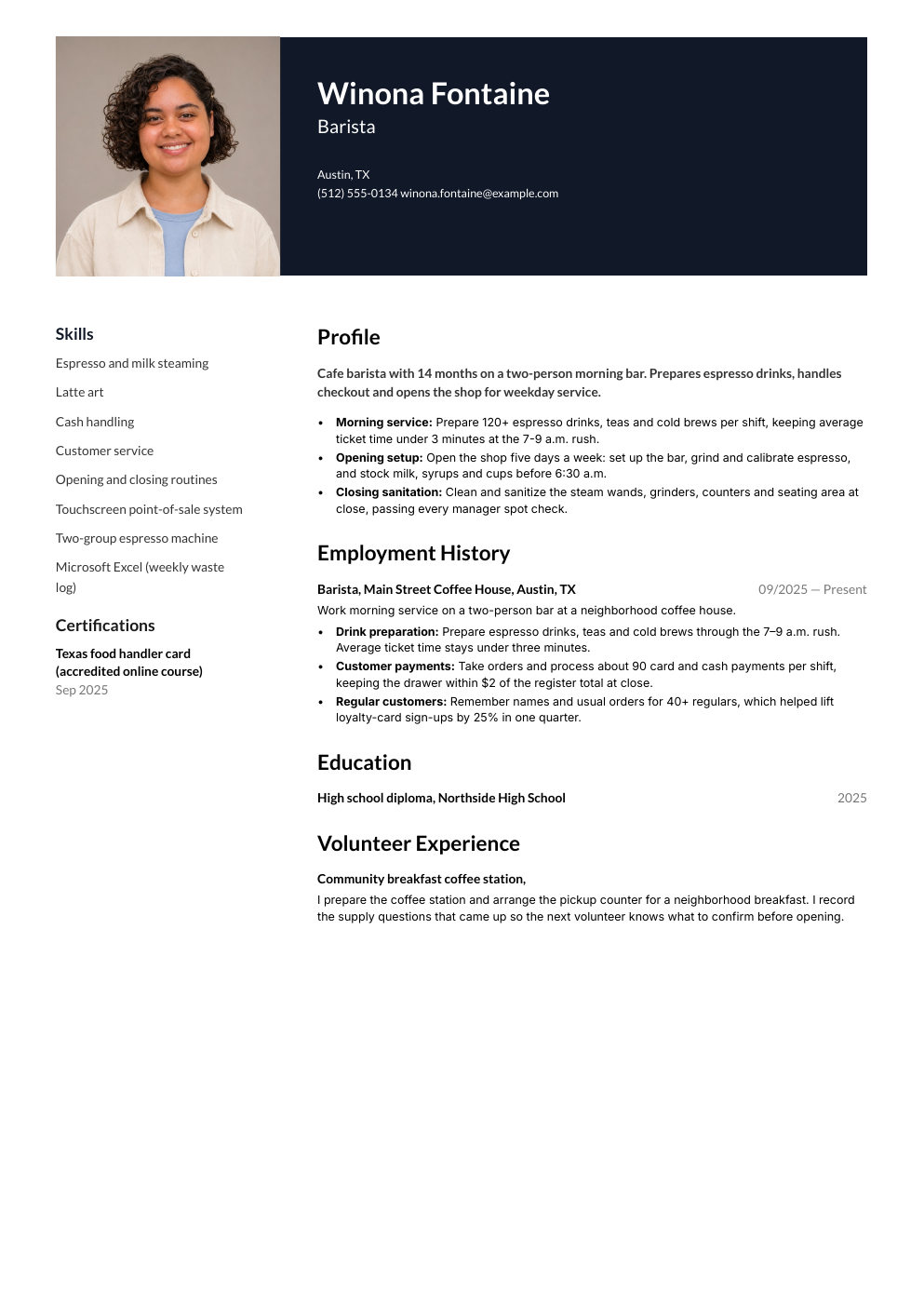
Start with the till, bar or drive-through window you actually covered. Add a second station if moving between them was part of the shift.
Use drinks for production, vehicles for drive-through service or guests for counter traffic. Each answers a different question.
Include the ticket time, order check or drawer count you used. State whether the measure applied to your station or the crew.
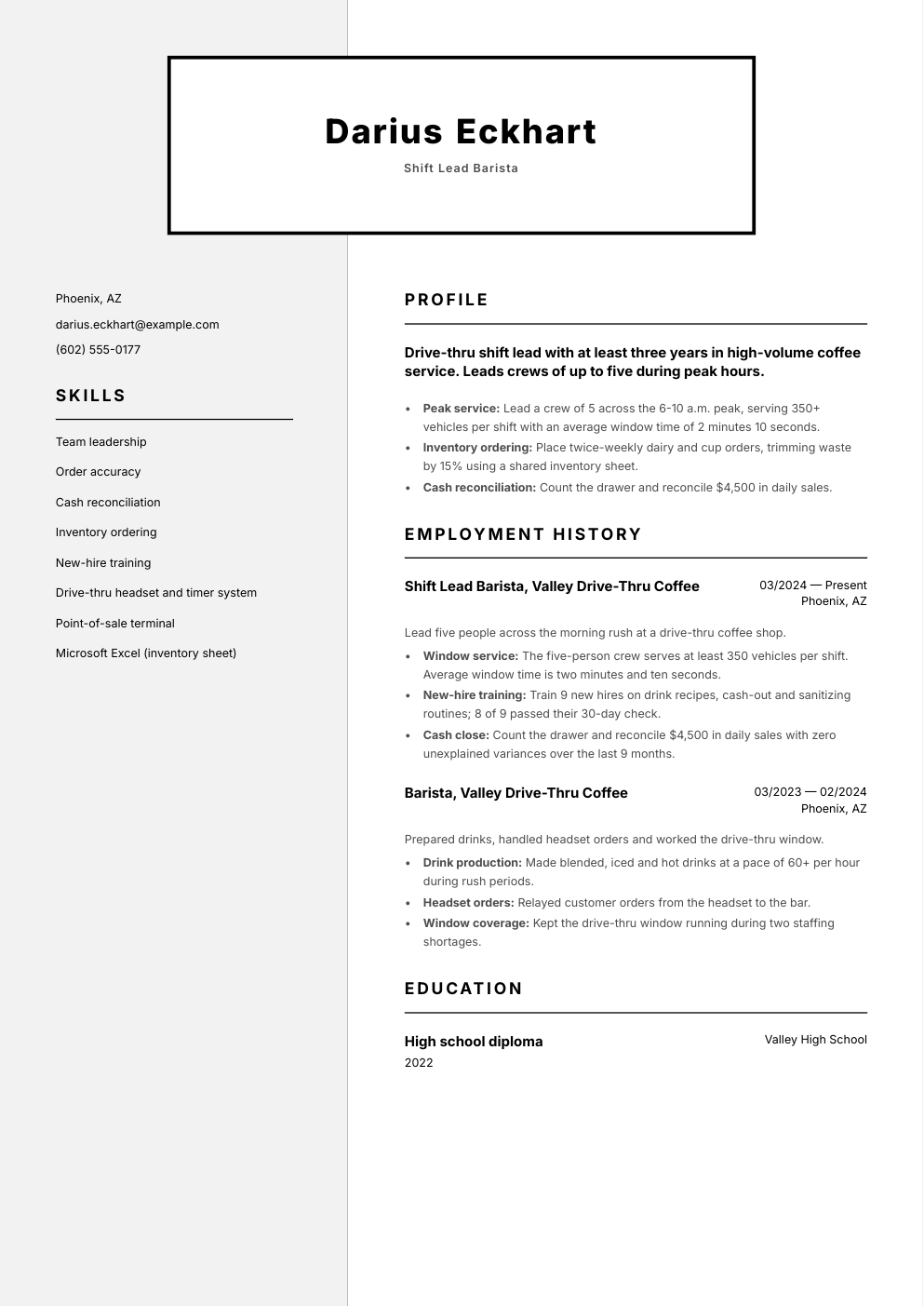
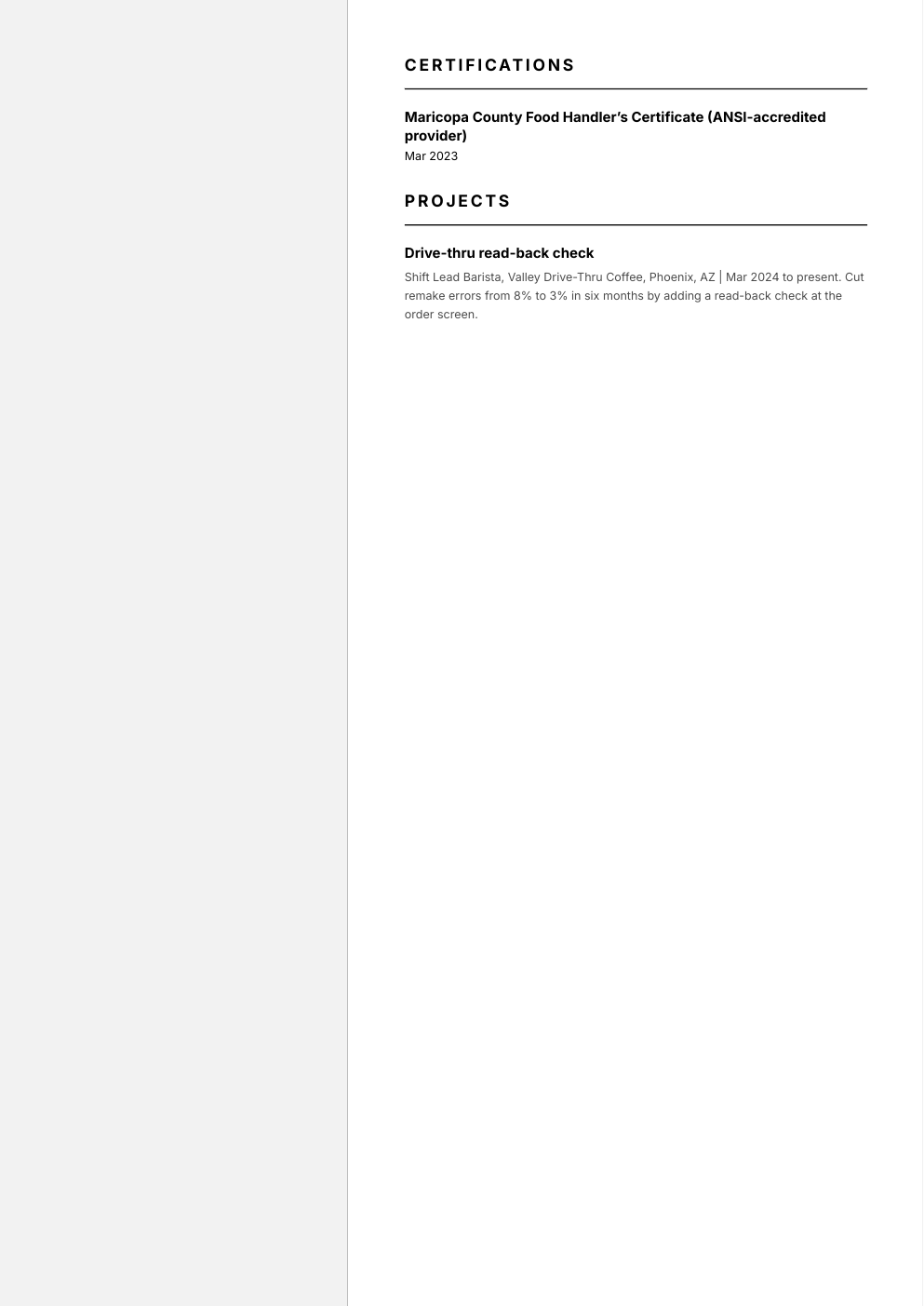
Pick one task you taught, such as calibrating espresso or closing the bar. A list of drinks says little about how you trained someone.
Say whether you demonstrated the task, worked alongside the trainee or checked a later shift. Include only steps you actually performed.
Name the skills check or time to independent work if the café tracked it. Keep a manager’s final sign-off attributed to the manager.
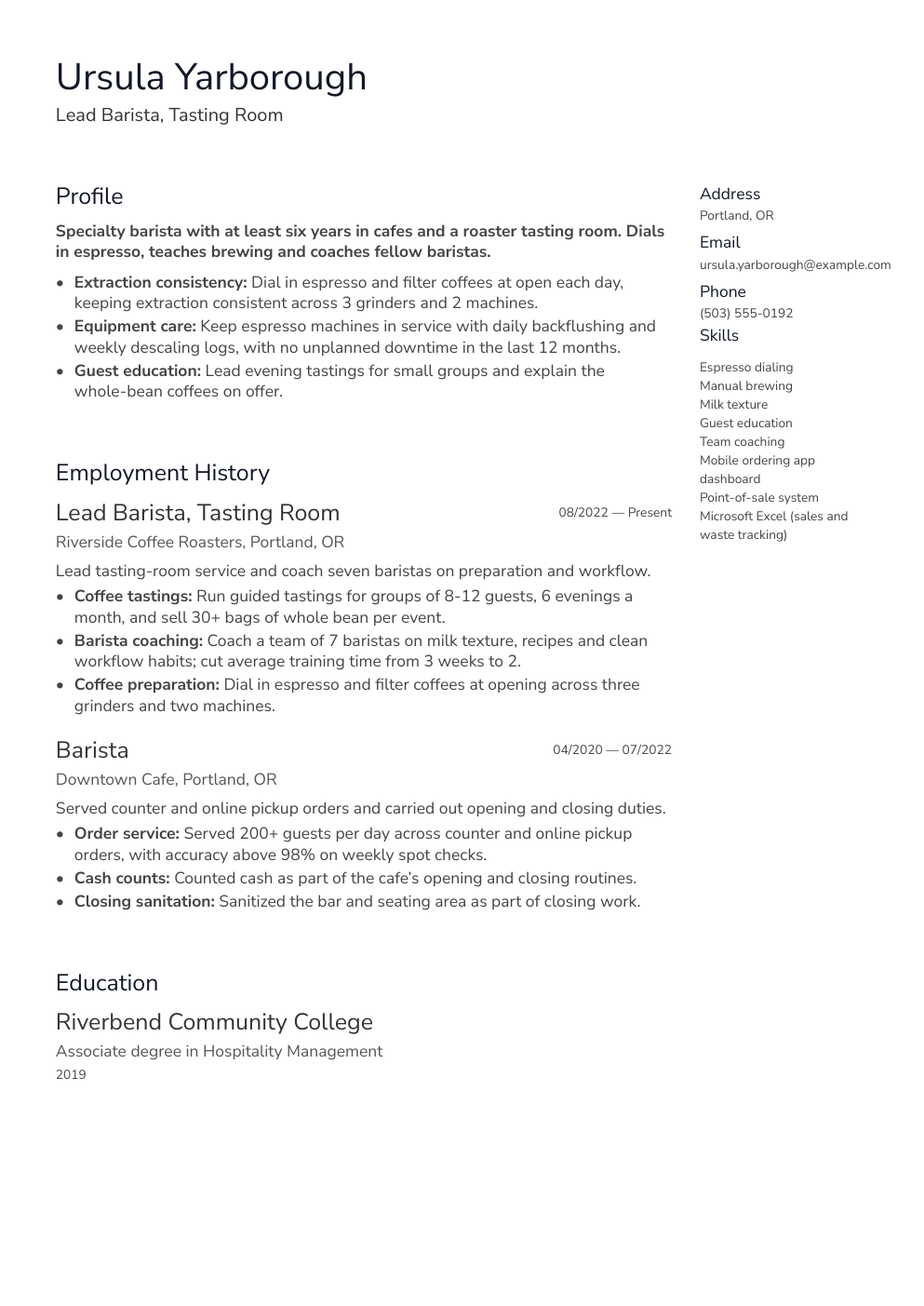
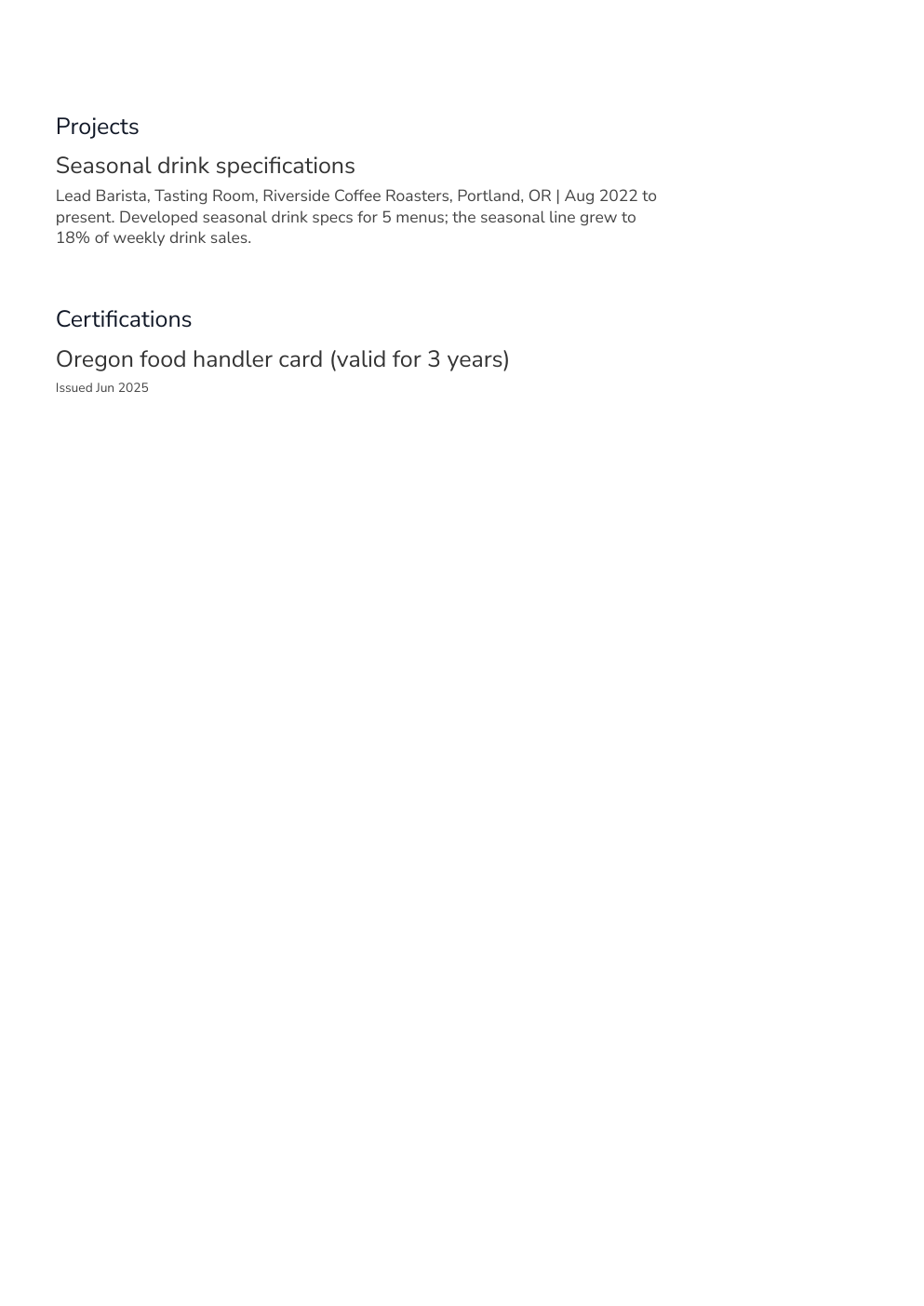
Use relevant experience handling orders, serving guests or working a till. Label any barista course as training and keep café experience separate.
Choose the drink categories or preparation methods in the opening. Use the remaining space for pace, consistency or equipment care.
Give the team size, vehicle count and period. Add your own station so the employer can distinguish crew throughput from your work.
Describe a repeat-service responsibility, such as remembering usual orders. Leave out names and avoid attributing all loyalty growth to one person.
Use the amount reconciled or typical drawer tolerance together with a period or number of closes. Keep cash totals separate from drink counts.
Name the setup duties you completed and when the station needed to be ready. An example from your own opening checklist is enough.
If you hold one, give the issuing authority and current status. Check the opening and its location for the credential requested.
Give the group size, how often you led tastings and what guests learned or bought. Distinguish event sales from daily café sales.
Choose a shift where you assigned stations, trained staff, ordered supplies or handled the close. Identify the responsibility you personally held.
Include it if it demonstrates payments, customer service or stock control. A concrete till or inventory example translates well to a café.
Import your CV, tailor it to a job with AI, add a cover letter. You approve every change.
Built for careful job applications
30 resume templates
Choose from professional layouts with real A4 previews.
ATS-friendly templates
Clean headings and text-based structure help hiring systems read the resume correctly.
AI suggestions you control
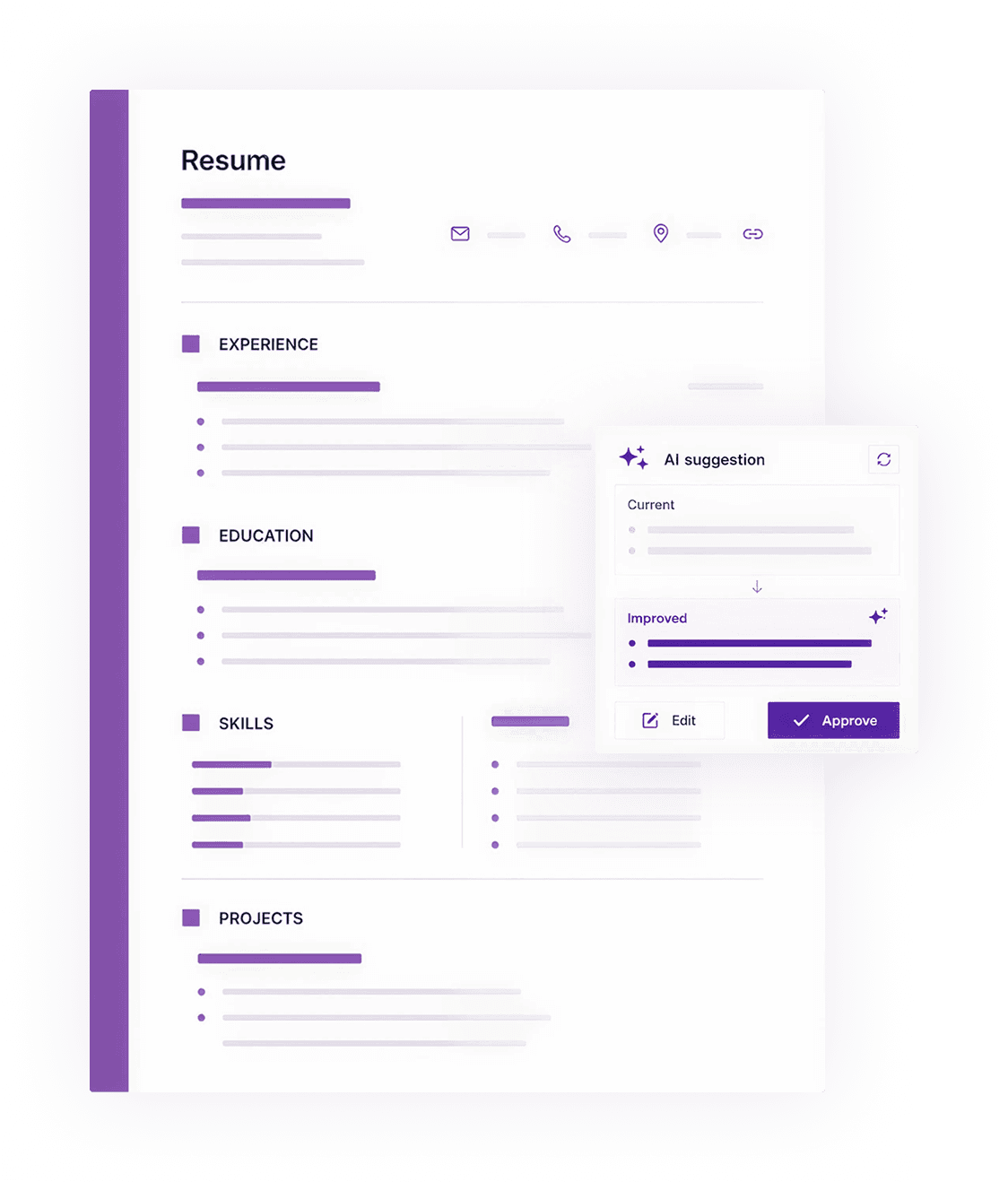
Rewrite summaries, bullets, and education text, then approve or edit before anything changes.
Job-description suggestions
Paste a role description and review suggestions before applying them.
Export-ready files
Download PDF, DOCX, or TXT when your resume and cover letter are ready.
Start from the CV you already have. Point it at a job description and export a resume and cover letter written for that role.
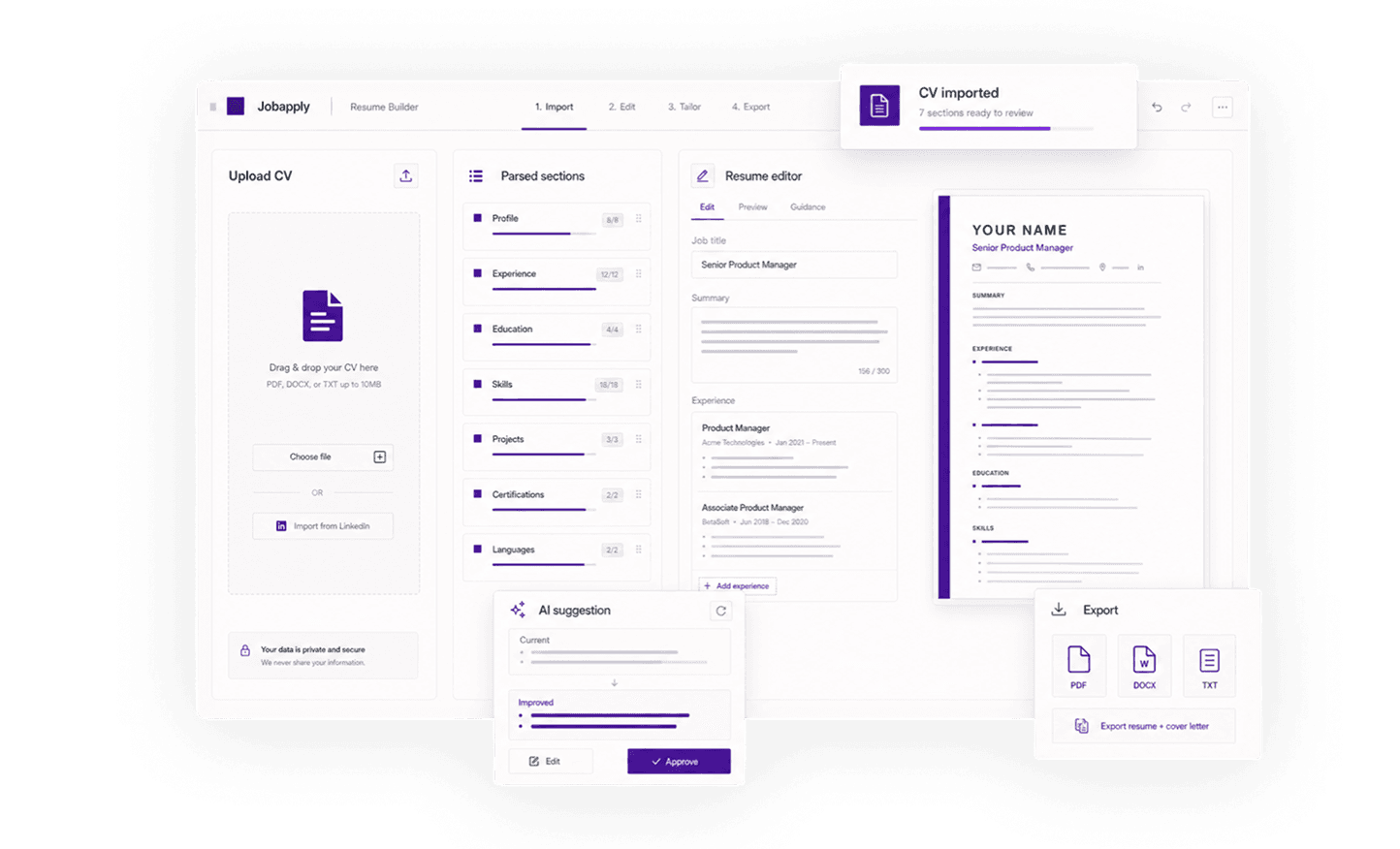
Every AI change appears beside your current text. Accept it, edit it, or skip it.
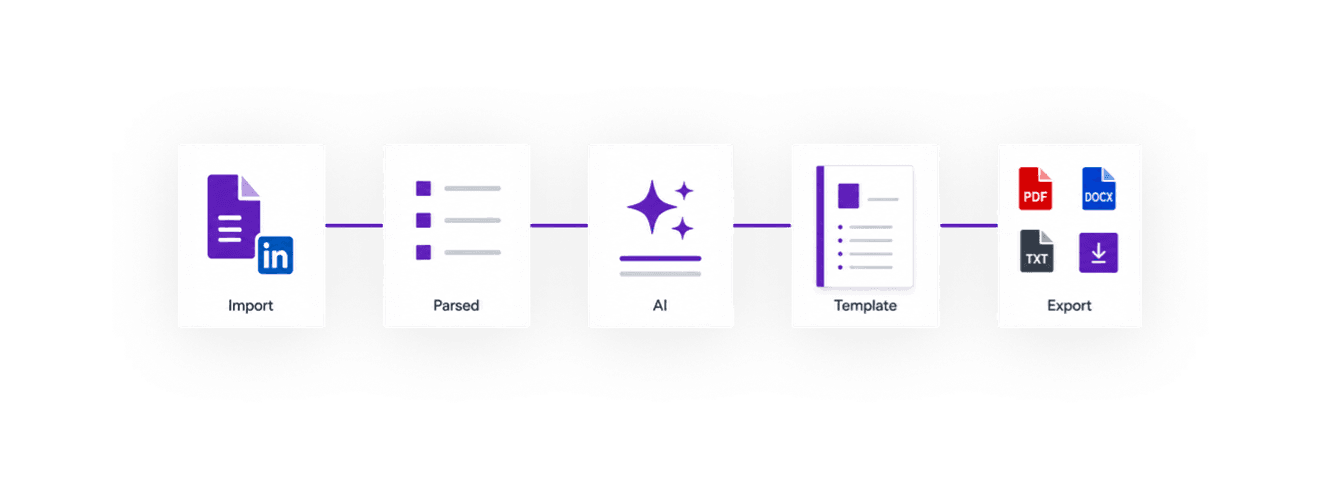
Start with a file or pasted text, then review the imported sections.
Fill in personal details, experience, education, skills, and optional sections.
Review job-description suggestions before applying them to your resume.


Download resume and cover letter files as PDF, DOCX, or TXT.




Start editing right away
Choose a template, import or add details, and keep editing without an activation gate.
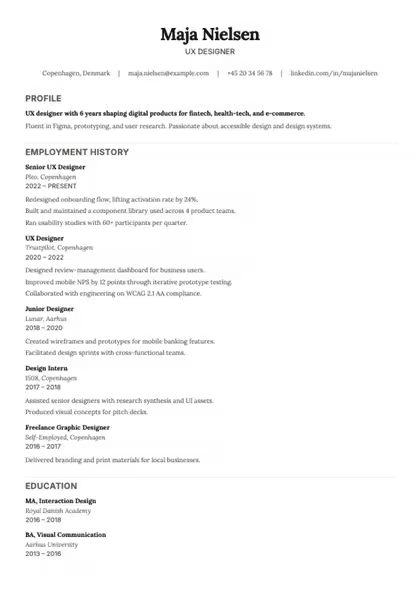
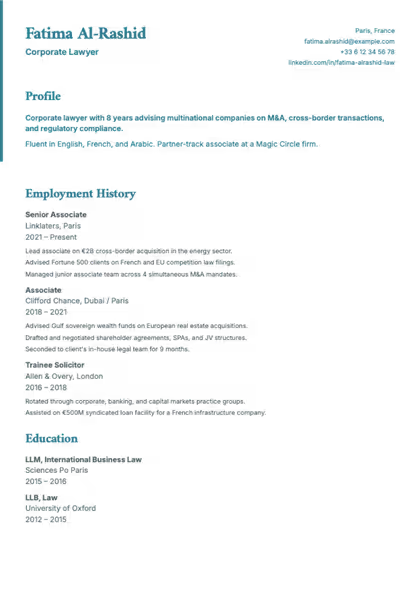
Built for academic CVs — calm serif titles and room for long publication lists.
Use this template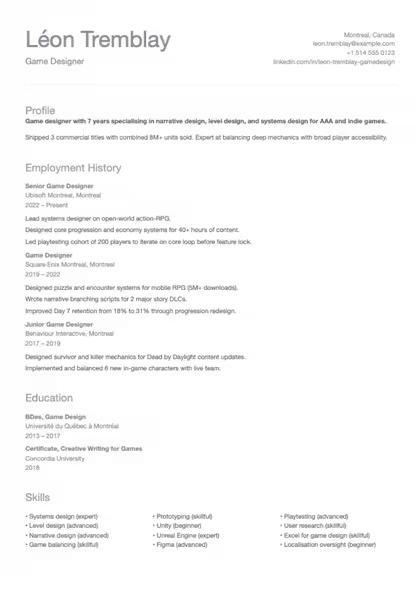
Swiss-minimal and strictly grayscale, for when restraint is the statement.
Use this template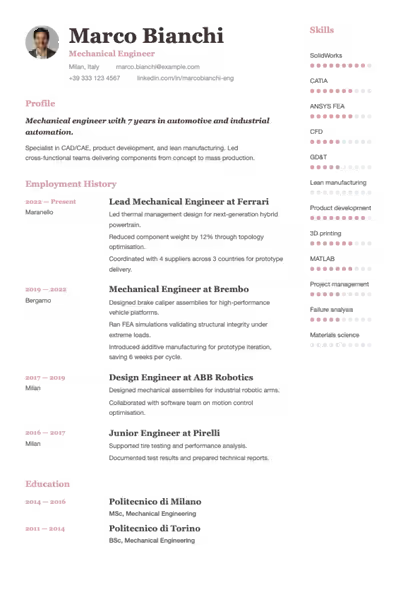
Editorial serifs with a dusty-rose touch — polished without trying too hard.
Use this template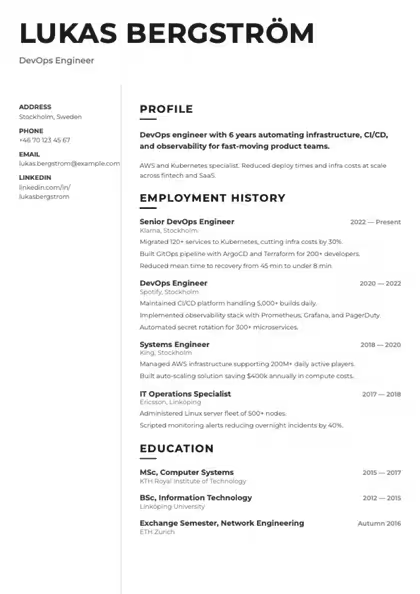
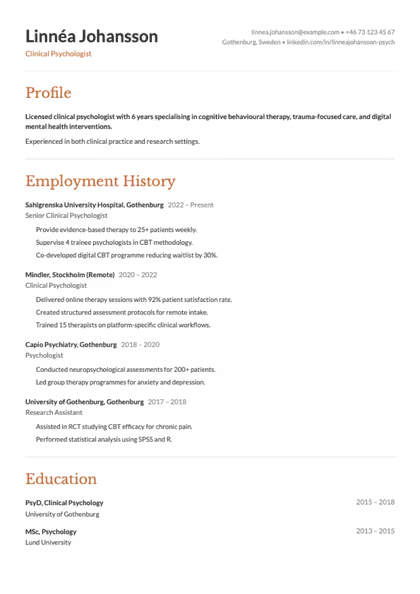
Warm and structured, with an orange accent that keeps formal from feeling stiff.
Use this template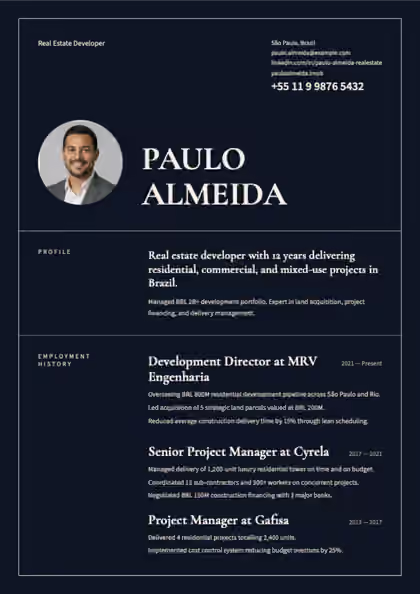
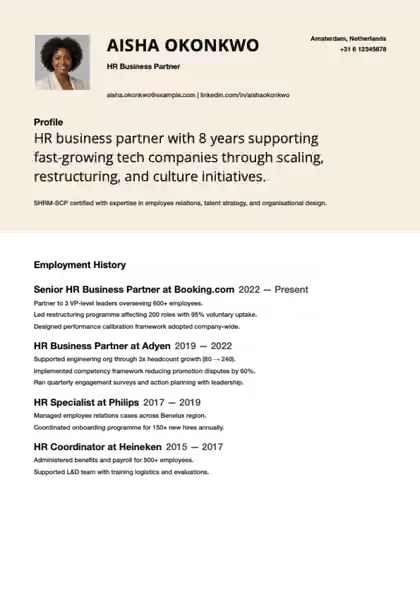
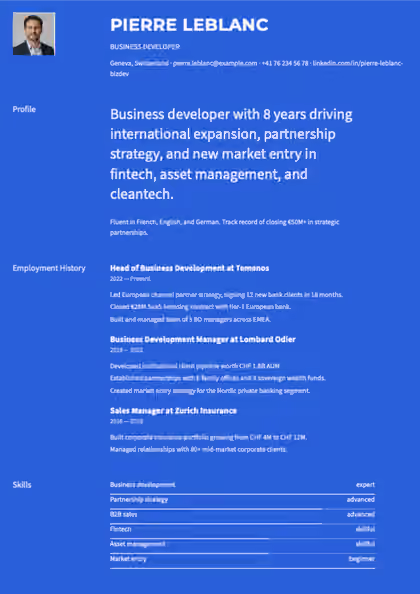
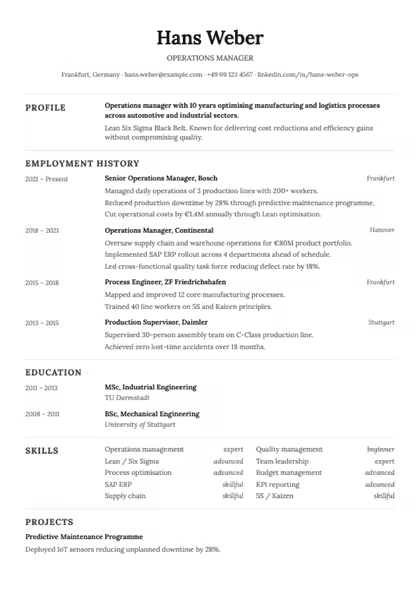
The classic European CV with a date-column timeline recruiters already know how to read.
Use this template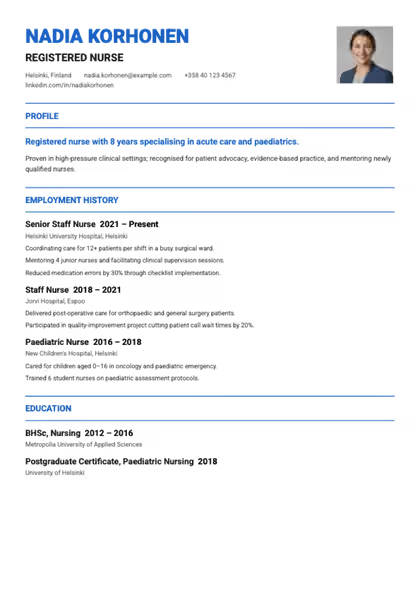
A clean single column with photo — the safe pick that still looks sharp.
Use this template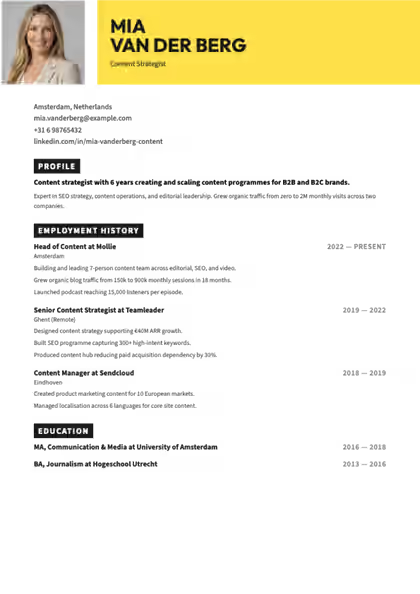
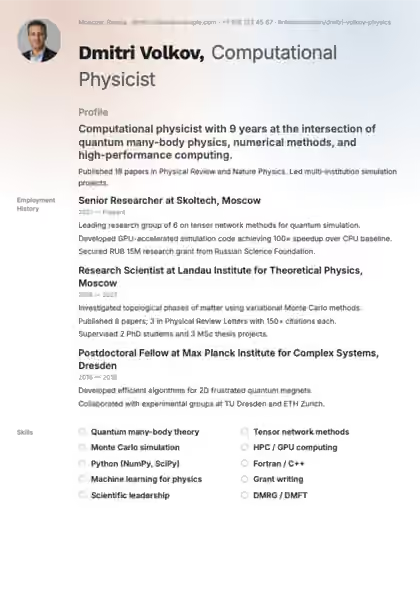
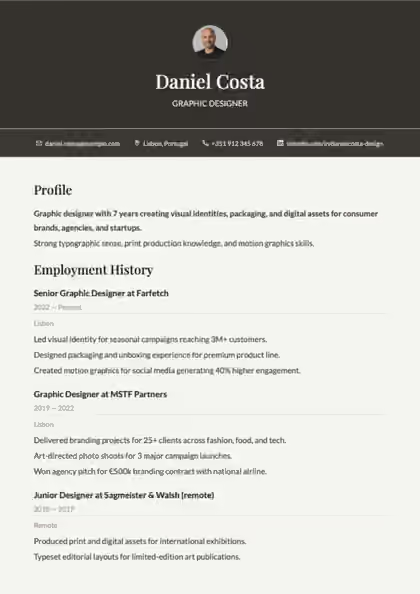
A warm gradient up top, strict left-label structure below — personality and precision.
Use this template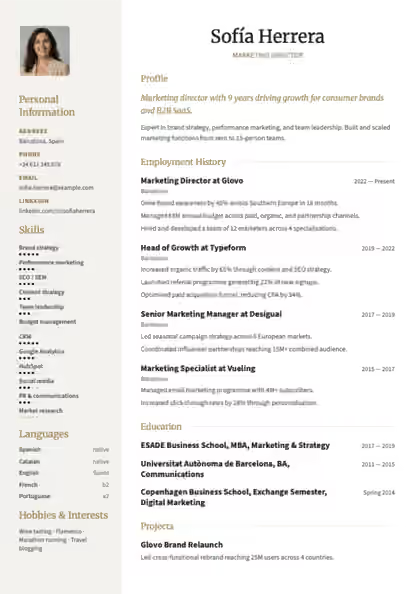
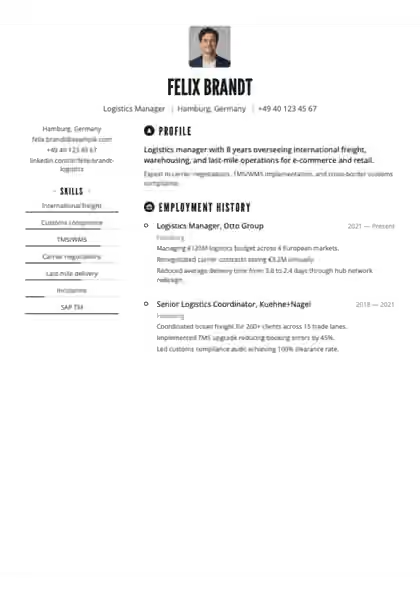
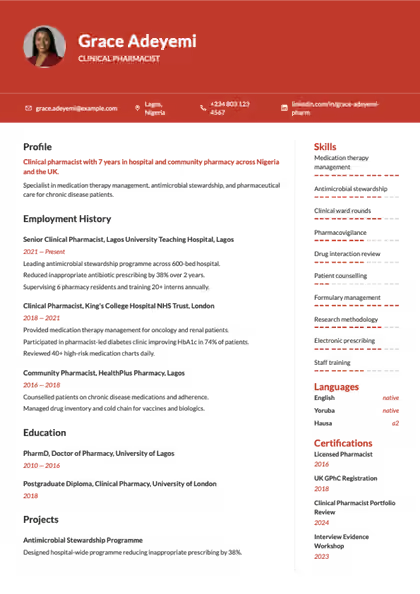
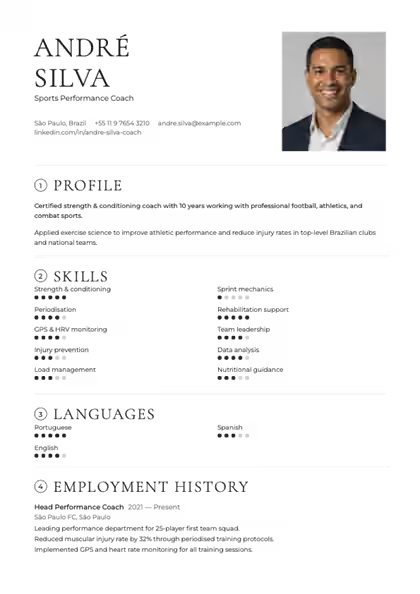
An editorial single column with circled section numbers — crafted, not decorated.
Use this template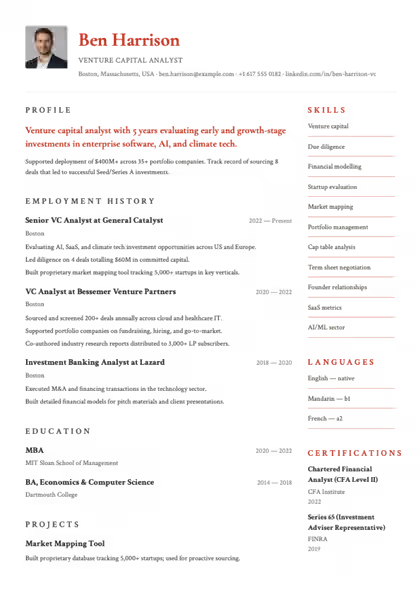
Classic serif two-column with a crimson accent, made for high-stakes applications.
Use this template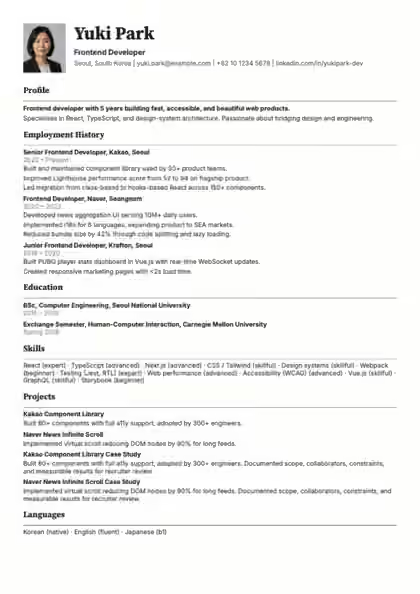
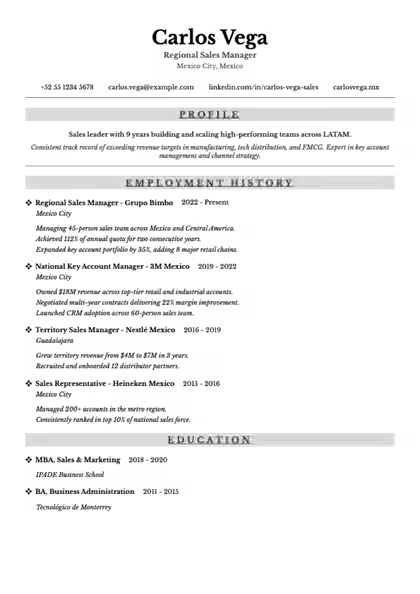
Classical detailing, diamond ornaments, dotted leader lines — fine print done right.
Use this template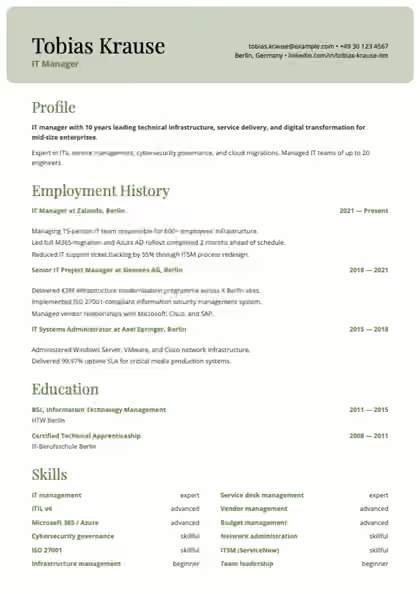
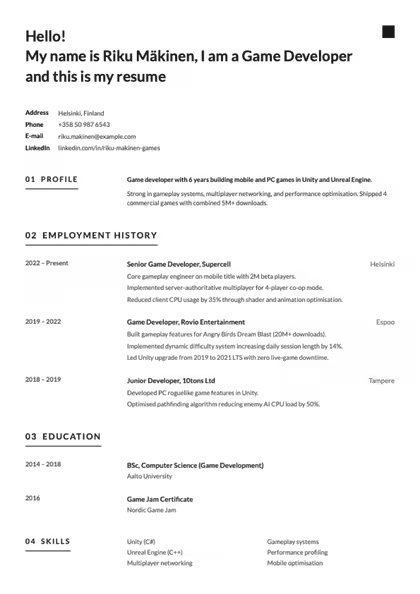
Opens with a greeting, breathes with numbered sections — personal and organized.
Use this template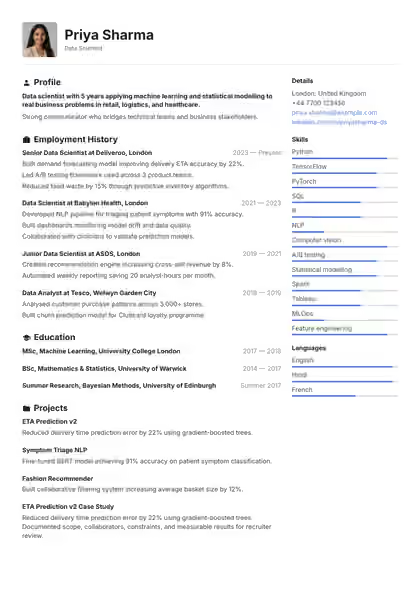
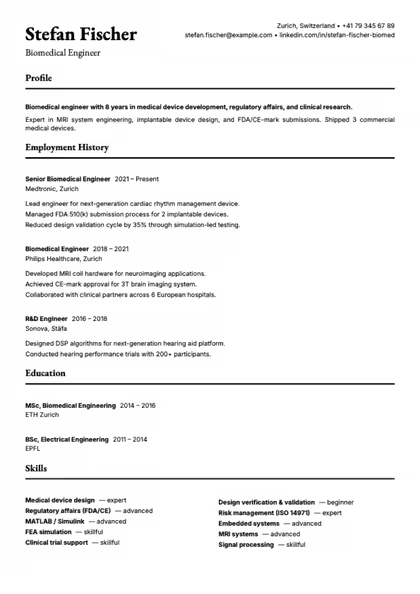
Traditional serifs and bold underline separators, made for deep expertise.
Use this template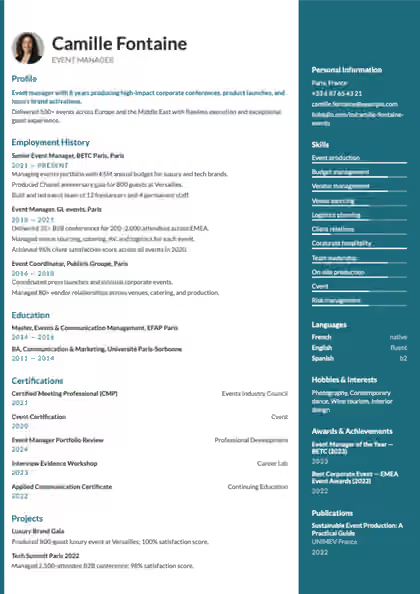
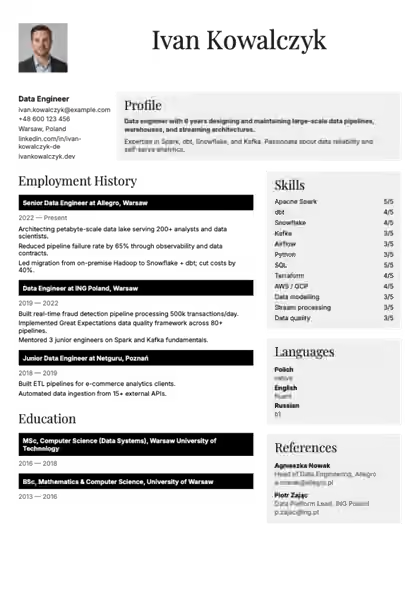
Bureau of Labor Statistics, Food and Beverage Serving and Related Workers · O*NET OnLine, Baristas.